






A single-story white house with dark gray shingled roof and black window shutters, set behind a mown lawn with blurred green foliage in the foreground and large deciduous trees behind.

AC Maintenance in Berlin, NH

Tell us about the job

Takes about a minute. No obligation.

Tune-up, service, or cleaningCentral ACCoos County, NH
Step 1 of 2

What ZIP code is the job in?

A tune-up starts before the panels come off. A tech checks the refrigerant charge against what the system is supposed to carry, because a unit running low won't cool right even if everything else is fine. The capacitor gets tested under load, not just looked at, since a weak one can still start the compressor and still fail next week. Contacts and wiring get checked for the kind of heat damage that builds up slowly and only shows itself when something finally trips. The condensate drain gets cleared, because algae and dirt narrow it from the inside and you won't know until water backs up somewhere you can't see. None of this is visible from the thermostat, and none of it shows up as a problem until the day it does.

73°F
the average summer afternoon it cools against
25 hail events
in ten years, and hail bends the fins on outdoor coils
62 wind events
in ten years, and wind drives debris into outdoor units
Isometric cutaway illustration of a house interior showing ducted HVAC piping, an indoor air handler unit, and an outdoor condenser with fan connected by a line, rendered in grey tones on a white background.
Your air conditioner works hardest from July through August.

NOAA nClimDiv, 1991–2020 normals

Your AC in Berlin only works hard a few weeks a year, with afternoons averaging 73°F all summer.

Light duty still means a yearly check, since what wears out here is age and neglect, not heat.

Half the homes here are old enough that nobody's sure what shape the AC is in

Half the homes here were built by 1969
Summer afternoons average 73°F
62 damaging wind events from 2015 to 2024
Once a year, every yearNew Hampshire electricity ran 23.40 cents per kilowatt-hour in 2024, and a dirty system spends more of it to do the same job.

Most of what shortens an AC's life has nothing to do with how hot it gets outside. A system that short-cycles, turning on and off in quick bursts instead of running a full cycle, puts more wear on the compressor than one that runs long and steady on a hot day. A dirty filter is behind more of this than people think, since restricted airflow makes the whole system work harder to move the same air. A tech checks static pressure to see how hard the blower is working against the ductwork, something you can't see or hear from inside the house. Refrigerant lines get checked for the kind of slow leak that doesn't show up as a sudden failure, just a system that cools a little less every month until one day it doesn't cool at all. None of these show up as a problem you'd notice day to day. They show up as a shorter life for a system that should have had a longer one.

Find out before the first hot day does

Half the homes in Coos County were built in 1969 or earlier. If yours is one of them and nobody's checked the AC in a while, a yearly visit is how you find out what shape it's in before a hot day does.

Find a contractor
A man in a cap, dark jacket and tan work pants, seen from behind, carries a canvas tool bag up porch steps toward a green front door beside a potted shrub.
An outdoor residential air conditioning condenser unit mounted on a concrete pad, surrounded by gravel with a blue sky in the background.

One visit a year covers it

A yearly check is a short visit against the alternative. A tech runs the system under load, checks the charge, tests the capacitor, and the whole thing takes less time than the problems it catches would take to fix later in July.

Running the system is the test

A thorough tune-up gets the AC running under load and takes readings there. The pressures, the temperature split between the air going in and the air coming out, the amps the compressor draws. A quick visit checks that the unit turns on and blows cold. A failing system can still do that right up until it can't.
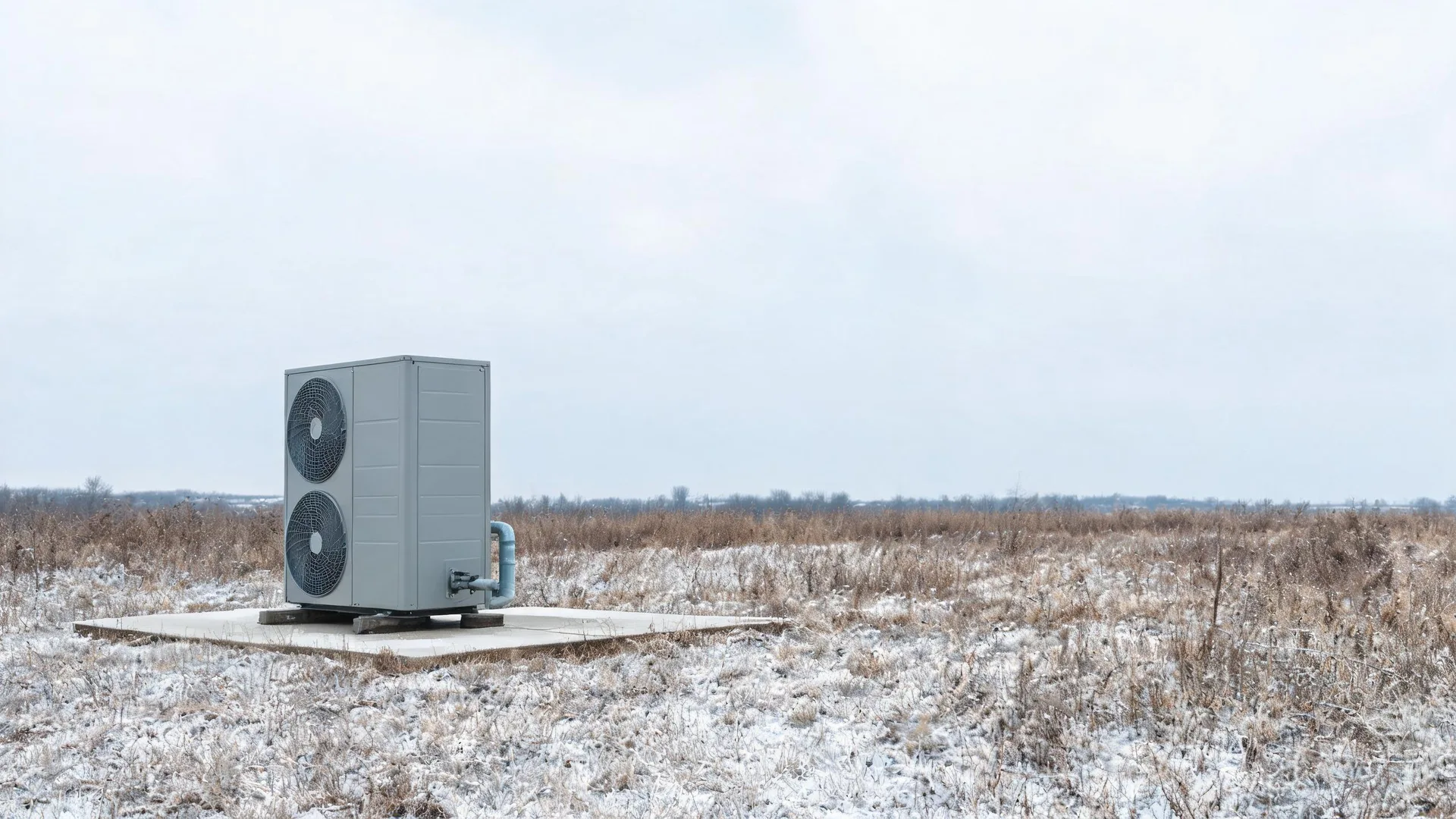
What gets touched, not just looked at

A capacitor gets tested with a meter, not eyeballed for a bulge. Coil fins get combed back out, not glanced at through the cabinet. The drain gets flushed, not checked for a drip. Anyone can open the panels and look around. The parts that actually fail are the ones that have to be measured or handled to know their real condition.

Skip the yearly check and the first thing to go is usually the capacitor, because nobody can see it weakening and it gives no warning before it does. The compressor still starts fine, right up until a hot stretch asks more of it and it can't. A dirty coil doesn't announce itself either. It just makes the system run longer to move the same heat, and that extra runtime wears on everything else in the cabinet, the fan motor, the compressor, the same parts a tune-up checks. A clogged condensate drain backs up quietly, and the first sign is water where it shouldn't be. None of this breaks overnight. It wears down over seasons nobody was watching, and it tends to give out on the day you need the system most.

A tune-up also covers the parts that don't fail quietly. The blower wheel gets checked for dirt buildup, because a coated wheel moves less air even running at full speed. Belts aren't usually part of the picture on this kind of system, since most residential units drive the blower directly off the motor, but the motor mounts and bearings still get checked for wear. The outdoor fan blade gets looked over for cracks or imbalance, since a blade that's out of balance will shake a motor apart over time. A tech also checks that the thermostat is actually calling for the right thing and that the system responds to it, because a stuck relay or a bad sensor can leave a unit running when it should cycle off, or not starting when it should.