







A single-story white house with dark gray shingled roof and black window shutters, set behind a mown lawn with blurred green foliage in the foreground and large deciduous trees behind.

AC Maintenance in Claremont, NH

Tell us about the job

Takes about a minute. No obligation.

Tune-up, service, or cleaningCentral ACSullivan County, NH
Step 1 of 2

What ZIP code is the job in?

Cooling in Claremont runs one month a year, July. There's no slow build up to it, the system goes straight to working hard. June is the time to have it checked, while it's still sitting idle and nothing depends on it yet. Wait until July and any weak part gets found on the first hot day, under load.

1 months
July through July, your air conditioner is on duty
77°F
the average summer afternoon it cools against
14 hail events
in ten years, and hail bends the fins on outdoor coils
58 wind events
in ten years, and wind drives debris into outdoor units
Isometric cutaway illustration of a house interior showing ducted HVAC piping, an indoor air handler unit, and an outdoor condenser with fan connected by a line, rendered in grey tones on a white background.
Your air conditioner works hardest from July through July.

NOAA nClimDiv, 1991–2020 normals

Your AC in Claremont only has to work hard in July, when the afternoon highs sit near 77°F.

The rest of the year it sits idle, so a weak part can go unnoticed until the first hot day asks something of it.

One month of cooling, one checkup before it

Power costs 23.4 cents a kWh statewide
Cooling runs July through July
Summer afternoons average 77°F
One checkup, every yearHalf the homes here were built in 1974 or earlier, half later. Age doesn't change the schedule.

A tune-up catches what the system itself won't report. It will still turn on and blow cold with a failing capacitor, a low charge, or a dirty coil, because none of those stop it from running, they just make it work harder to get there. A gauge set on the refrigerant lines shows a charge that's drifted low long before the house feels it. A meter on the capacitor shows it's putting out less than it should while it's still managing to start the compressor every time. None of that is visible from the thermostat, and none of it announces itself until the heat actually asks something of the system. That's what the visit is for, finding the part that's already struggling while it's still doing its job.

Have it checked in June, before July needs it

June is the month to get it checked, before July asks anything of it. Get it looked at now and any weak part gets found while nothing depends on it yet.

Find a contractor
A man in a cap, dark jacket and tan work pants, seen from behind, carries a canvas tool bag up porch steps toward a green front door beside a potted shrub.
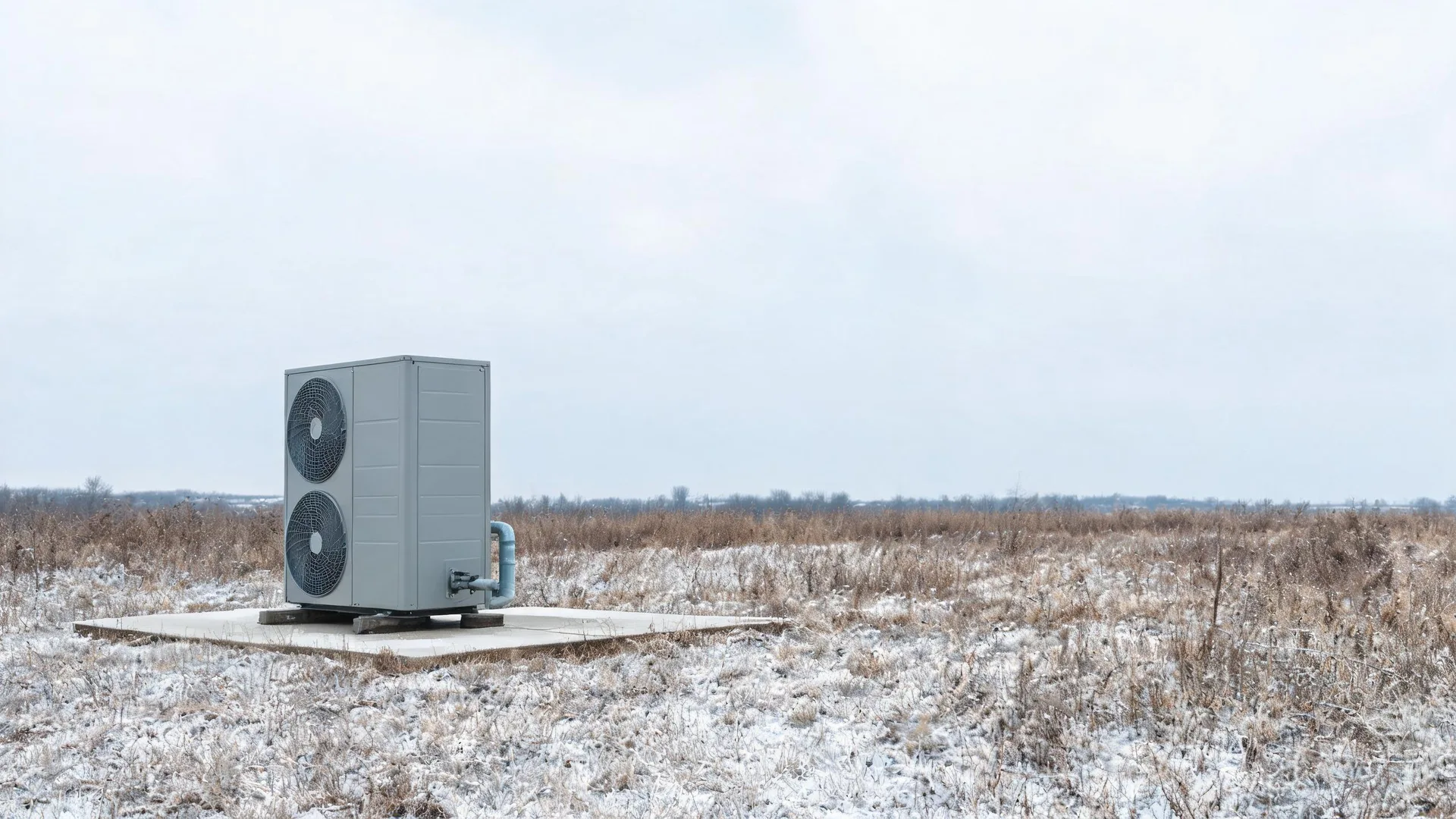
An outdoor residential air conditioning condenser unit mounted on a concrete pad, surrounded by gravel with a blue sky in the background.

A glance or a real look

A quick visit gets you a glance and a hose-down. Someone pulls the panel, looks at the coil, maybe rinses it, checks that the system kicks on and blows cold, and moves on. A thorough one puts numbers to things. The refrigerant charge gets checked against what the system calls for, not just guessed at. The capacitor gets tested under load, since a weak one can still start the compressor on a cool day and fail outright on a hot one. The contactor points get checked for pitting. The condenser coil gets cleaned, not just looked at, since a coil caked with a season of dust and grass clippings can't shed heat the way it needs to. Electrical connections get tightened, because a loose one builds resistance and heat right at the lug. The blower wheel gets checked for a film of dust built up on the blades, which throws off airflow even when the motor sounds fine. None of this takes long to do right, but it's the difference between a system that gets confirmed healthy and one that just gets confirmed on.

What the filter is actually for

A dirty filter chokes airflow before it ever reaches the coil. The blower has to work harder to pull air through it, and less air moves across the evaporator coil on the other side. Starved of airflow, that coil can get cold enough to ice over, and once it's coated in ice it stops absorbing heat from the air at all. A filter changed on schedule is part of what keeps the coil doing its job.

Why the drain line matters just as much

The evaporator coil pulls moisture out of the air all summer, and that water has to go somewhere. It drips into a pan and out through a condensate line, and that line can clog with the same algae and dust that builds up anywhere water sits. A clogged drain backs up into the pan until it overflows, and that happens quietly, usually right above a closet or a furnace below it.

Overhead view of an air conditioning condenser unit on a concrete pad next to a house with asphalt shingle roofing and vinyl siding.

Book your AC tune-up in June, before homes here start needing cooling in July.

  1. Jan
  2. Feb
  3. Mar
  4. Apr
  5. May
  6. Jun
  7. Jul
  8. Aug
  9. Sep
  10. Oct
  11. Nov
  12. Dec

A tune-up checks the refrigerant charge, cleans the coils, tests the capacitor and tightens the electrical connections.

Skip the yearly check and the system doesn't fail right away. It just drifts, a little worse each summer, with nothing forcing the point until the day it quits. A capacitor weakens slowly, and a compressor will keep starting on a weak one for a long time before it finally can't. Refrigerant doesn't get used up, but a slow leak will bleed the charge down year over year, and every bit lost makes the compressor work harder to move the same heat. A coil that never gets cleaned traps dirt against metal that's supposed to shed heat into the outside air, so the system has to run longer to do the same job. None of this shows up as a sudden breakdown. It shows up as a system working harder than it should, right up until the one day it has real work to do.