






A row of illuminated white colonial houses photographed at twilight along a tree-lined road with a stone wall in the foreground.

AC Maintenance in Concord, NH

Tell us about the job

Takes about a minute. No obligation.

Tune-up, service, or cleaningCentral ACMerrimack County, NH
Step 1 of 2

What ZIP code is the job in?

A dirty filter is the start of most service calls. Once it clogs, the system has to pull harder to move air, and the coil behind it can ice over from the lack of airflow. An iced coil stops cooling altogether, and running the system that way can push liquid refrigerant back to the compressor, which is not built to handle that. Outside, the condenser coil needs clear airflow too, so leaves and grass clippings packed against it cause the same strain. The condensate drain matters just as much. It carries away the water the coil pulls out of the air, and when it clogs with algae, that water backs up into the pan and sometimes into the ceiling or wall below. Keeping the filter changed and the drain clear is most of what keeps this system out of trouble.

2 months
July through August, your air conditioner is on duty
79°F
the average summer afternoon it cools against
21 hail events
in ten years, and hail bends the fins on outdoor coils
79 wind events
in ten years, and wind drives debris into outdoor units
Isometric line illustration of a cutaway house showing interior rooms with ductwork, an air handler and furnace, connected by lines to an outdoor condenser unit on the ground outside.
Your air conditioner works hardest from July through August.

NOAA nClimDiv, 1991–2020 normals

Warm air from the vents when the thermostat is set low enough to run.

Weak airflow or warm air points to low refrigerant or a failing compressor, and neither one fixes itself.

Two months of cooling, one check is enough

Power costs 23.4 cents a kWh statewide
Cooling runs July through August
Summer afternoons average 79°F

Your AC here only has to work July and August, with afternoon highs averaging 79°F. That's a short, mild run compared to what the system would face further south, and it means less wear on the compressor and the coils over its lifetime. Most of what shortens a system's life is heat load, and this one doesn't see much. But light duty doesn't mean no duty. Belts, motors and capacitors still age, and a yearly check catches a weak part before it quits on the one hot week you actually need it.

Get your AC checked in June, before July's heat arrives

Cooling starts in July here. Have the AC checked in June, before it has to run.

Find a contractor
A man in a dark long-sleeve shirt and olive cargo pants, seen from behind, carries a waxed canvas tool bag up porch steps toward a green front door of a gray clapboard house.
A gray metal air conditioning condenser unit mounted on a concrete pad in a flat grassy field under a partly cloudy sky.

Checked once, run twice a year

This system gets asked to work in July and August and rests the rest of the year. That long rest is exactly why a spring check is worth doing before the first hot day. A capacitor or contactor can weaken over months of sitting idle, and nothing shows it until the system has to start up and hold steady under load. A technician testing it in June catches that weak part on a mild day instead of a hot one. The check is the same whether the system had an easy winter or a hard one. What changes is whether anyone looked before it had to work.

Change the filter yourself

A homeowner can pull the filter and hold it up to a light. If light barely gets through, swap it. A clean filter is the one thing between visits that actually protects the system, since everything upstream of it, the coil and the compressor, depends on steady airflow.

Leave the refrigerant and electrical side alone

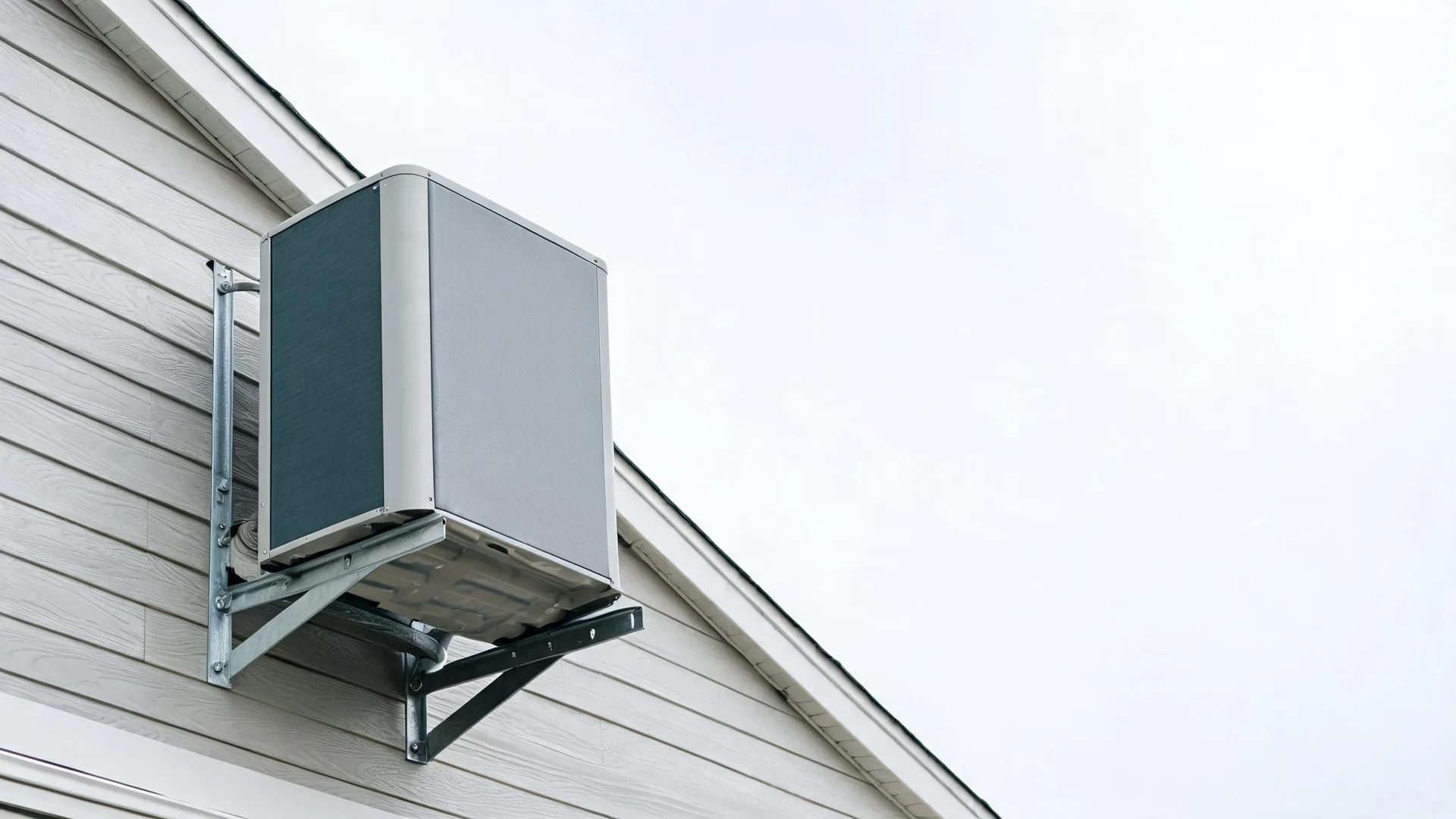
The refrigerant lines and the components inside the outdoor unit are not something to open up or top off. Low refrigerant means a leak somewhere in a sealed system, and that calls for gauges and a trained eye, not a homeowner guess. Clearing leaves away from the condenser is safe and worth doing. Opening the cabinet is not.

Aerial view of a residential air conditioning condenser unit mounted on a concrete pad next to a house with vinyl siding and a sliding glass door.

Book your AC tune-up in June, before homes here start needing cooling in July.

  1. Jan
  2. Feb
  3. Mar
  4. Apr
  5. May
  6. Jun
  7. Jul
  8. Aug
  9. Sep
  10. Oct
  11. Nov
  12. Dec

A tune-up checks the refrigerant charge, cleans the coils, tests the capacitor and tightens the electrical connections.

A real tune-up starts with the capacitor and contactor, since those are the parts most likely to weaken while the system sits idle. A technician checks the capacitor's charge against its rating, because a weak one still starts the compressor some days and fails on others, and there's no way to tell by looking at it. The contactor's points get checked too, since they pit and burn with age and can stick closed or fail to pull in. From there it's refrigerant pressure and temperature split, checked against what the system should be moving air at, which catches a slow leak before it turns into a warm house on the hottest day. The condenser coil gets cleaned if it's caked with debris, since a dirty coil makes the compressor work against higher head pressure all season. Electrical connections get tightened, because a loose one heats up under load and burns before anyone notices. None of this fixes something broken. It finds what's about to be.