A weathered wooden picket fence runs along a mown lawn in front of a row of two-story light-colored siding townhouses, with large tree branches overhanging under an overcast sky.

AC Maintenance in Conway, NH

Tell us about the job

Takes about a minute. No obligation.

Tune-up, service, or cleaningCentral ACCarroll County, NH
Step 1 of 2

What ZIP code is the job in?

Short cycles or warm air from the vents

If the AC shuts off soon after it starts, or it runs but the air coming out isn't cold, something is already wrong. A weak capacitor, a low refrigerant charge, or a failing contactor can all cause this. Waiting usually turns a simple fix into a compressor replacement.


What a check actually catches

A tech checks the refrigerant charge, tests the capacitor and contactor, and looks at the coil and drain line for buildup that blocks airflow or backs up condensate. These are the parts that fail quietly, long before the system stops cooling altogether.

1 months
July through July, your air conditioner is on duty
77°F
the average summer afternoon it cools against
37 hail events
in ten years, and hail bends the fins on outdoor coils
70 wind events
in ten years, and wind drives debris into outdoor units
Isometric cutaway illustration of a single-story house showing interior rooms with furniture, overhead ductwork, an indoor air handler unit, and an outdoor condenser unit connected by lines at the side of the building.
Your air conditioner works hardest from July through July.

NOAA nClimDiv, 1991–2020 normals

Conway's AC runs one month a year, July.

A system that light on duty is almost always worth fixing instead of replacing.

One month of work a year is not much to ask a tune-up to cover

Power costs 23.4 cents a kWh statewide
Cooling runs July through July
Summer afternoons average 77°F
One month of cooling, one month to get readyCooling runs in July here. June is when to get it checked.

Carroll County sees rough weather most counties don't. 214 severe weather events between 2015 and 2024, most of them winter storms, with damaging wind and hail in the mix too. Your outdoor unit sits outside through all of it. Wind drives branches and grit into the coil, hail can dent the fins, and heavy snow piles up around the cabinet over winter. None of that shows up as a problem until you turn the AC on for the first time. A tech checking the coil, fins and cabinet before the season catches that kind of damage while it's still a cleaning or a straightened fin, not a replaced coil.

Half the homes here were built in 1982 or later, so yours is likely still in its prime

Half the homes in Carroll County were built in 1982 or later. A system in a newer house usually has a lot of working life left in it. A yearly check before summer is what keeps it that way.

Find a contractor
A man in a cap, dark shirt and brown work pants, seen from behind, climbs wooden porch steps toward a green front door while carrying a worn canvas bag.
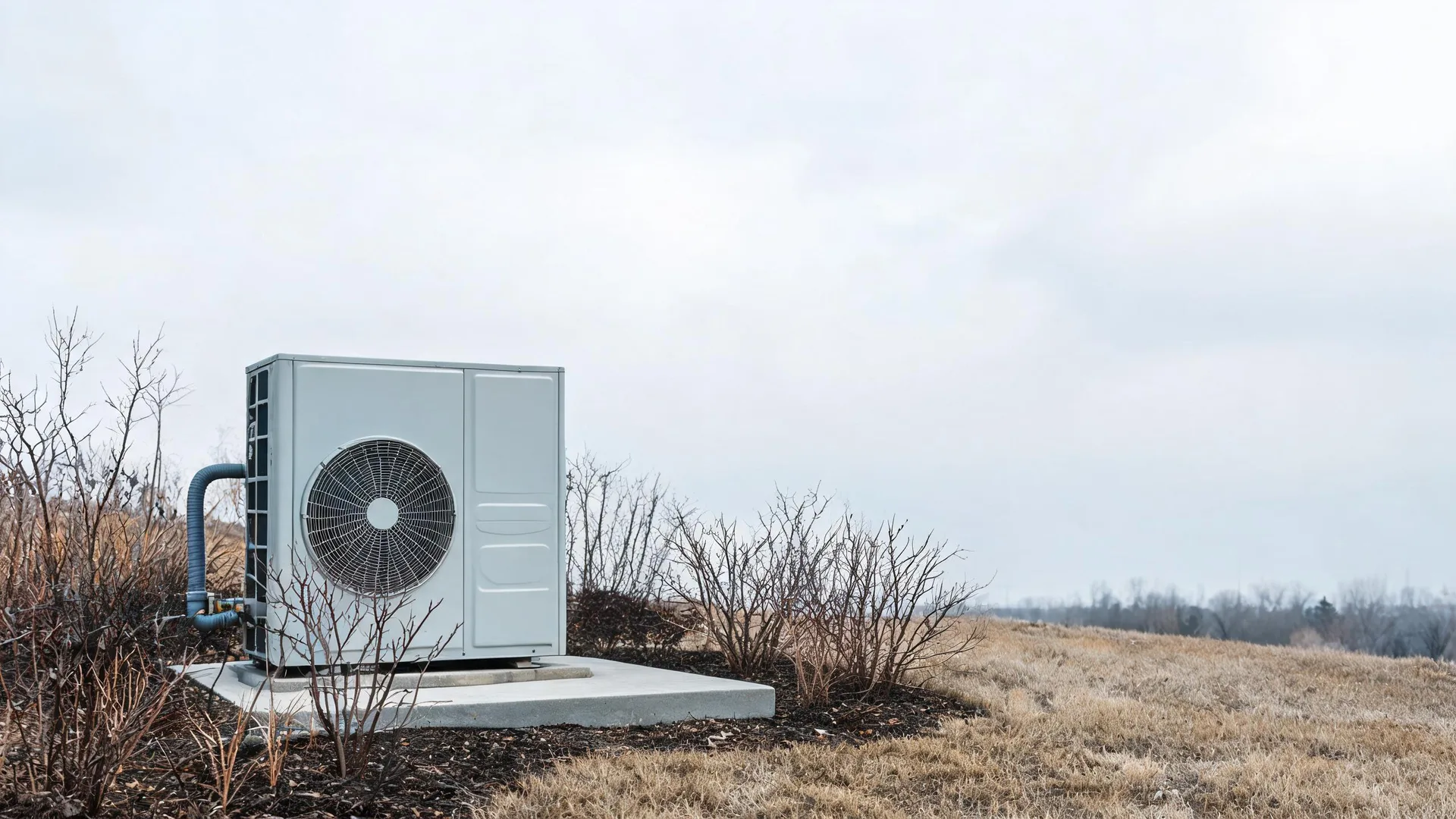
A gray residential air conditioner condenser unit mounted on a concrete pad in an open grass field.

What's yours to watch, what isn't

A yearly check covers what a tech can see and test with the panels off. Between visits, the filter is the one part that's on the homeowner. A dirty filter chokes airflow before anything else does, and it's the easiest thing to check without a tool in hand. Outside, keeping leaves, grass clippings and mulch away from the condenser cabinet matters more than people think. That unit needs air moving through the fins to shed heat, and anything piled against it or growing up around it makes the compressor work harder to do the same job. If the system ever trips a breaker, or the outdoor fan stops turning while the indoor blower keeps running, that's not something to reset and walk away from. Shut it off and get it looked at, because a compressor can take real damage trying to cool with the condenser side not doing its part.

The filter is doing more than cleaning air

A clogged filter starves the evaporator coil of airflow. Less air moving across the coil means less heat getting pulled out of it, and the coil itself can ice over when airflow drops too low. A filter changed on schedule is one of the cheapest ways to keep that coil working the way it's supposed to.

The drain line fails quietly, then all at once

Condensate forms on the evaporator coil and is supposed to run off through the drain line. Algae and dust build a film inside that line over time, and once it narrows enough, water backs up into the drip pan or the cabinet instead of draining outside. Nothing about a clogged drain line is loud or obvious until the overflow shows up.

Overhead view of an air conditioning condenser unit on a concrete pad next to a house with asphalt shingle roofing and vinyl siding.

Book your AC tune-up in June, before homes here start needing cooling in July.

  1. Jan
  2. Feb
  3. Mar
  4. Apr
  5. May
  6. Jun
  7. Jul
  8. Aug
  9. Sep
  10. Oct
  11. Nov
  12. Dec

A tune-up checks the refrigerant charge, cleans the coils, tests the capacitor and tightens the electrical connections.

A real tune-up starts outside at the condenser, not with a quick look through the cabinet louvers. The tech pulls the top or side panel and checks the capacitor's output against what it's rated for, because a capacitor can test weak long before it fails outright, and a weak one makes the compressor hard-start every cycle. Refrigerant charge gets checked against the system's target, not just topped off, since a system low on charge is almost always low because of a leak somewhere. The contactor gets a look for pitting, since that's what eventually keeps the outdoor unit from kicking on at all. Indoors, the evaporator coil and blower wheel get checked for buildup that chokes airflow, and the drain line gets cleared before it clogs and backs up. None of these parts show trouble until one of them finally gives out, which is the whole reason to check them before that happens rather than after.