Overhead view of a gray residential air conditioning condenser unit mounted on a concrete pad beside a house with asphalt shingle roofing.

AC Maintenance in Manchester, NH

Tell us about the job

Takes about a minute. No obligation.

Tune-up, service, or cleaningCentral ACHillsborough County, NH
Step 1 of 2

What ZIP code is the job in?

The gauges come out

A thorough tune-up checks the refrigerant charge with gauges and looks at the temperature split between the air going into the system and the air coming out. A quick visit just looks the unit over and listens for noise, which won't catch a system that's low on charge or a coil that's losing its grip on heat.


The condenser coil gets washed, not glanced at

Dirt packed into the condenser coil makes the compressor work harder and shortens its life. A real cleaning means washing the coil out with water and a cleaner made for it. If the tech only wipes off the top layer or skips it because the unit looks clean from outside, the compressor is still working against buildup nobody saw.

2 months
July through August, your air conditioner is on duty
79°F
the average summer afternoon it cools against
30 hail events
in ten years, and hail bends the fins on outdoor coils
147 wind events
in ten years, and wind drives debris into outdoor units
Isometric cutaway illustration of a single-story house with a dark shingled roof, showing interior rooms with ductwork and an indoor air handler connected to an outdoor condenser unit beside the building.
Your air conditioner works hardest from July through August.

NOAA nClimDiv, 1991–2020 normals

Cooling in Hillsborough County starts in July and only runs about two months.

June is the month to get the AC checked, right before it has to work.

Two months of real heat is still a full summer for your AC

Power costs 23.4 cents a kWh statewide
Cooling runs July through August
Summer afternoons average 79°F
One AC checkup a year is enough hereHalf the homes here were built in 1978 or earlier, half later, and neither needs more than one check a year.

Two months of cooling a year is light duty. Afternoons average 79 degrees here across June, July and August, nowhere near the kind of heat that pushes a compressor to its limit day after day. That lighter load means less wear on the compressor and the coil than a system in a hotter state would see over a full summer. But light duty still is duty, and parts age whether the system ran hard or not. A belt-free system wears from use and from sitting idle too, and a refrigerant leak or a weak capacitor doesn't care how mild the summer was. A yearly check catches that wear while it's still small, so the system is ready for the two months it actually has to work.

Book it before the season

It starts running hard in the first month of the season here. Book the check the month before.

Find a contractor
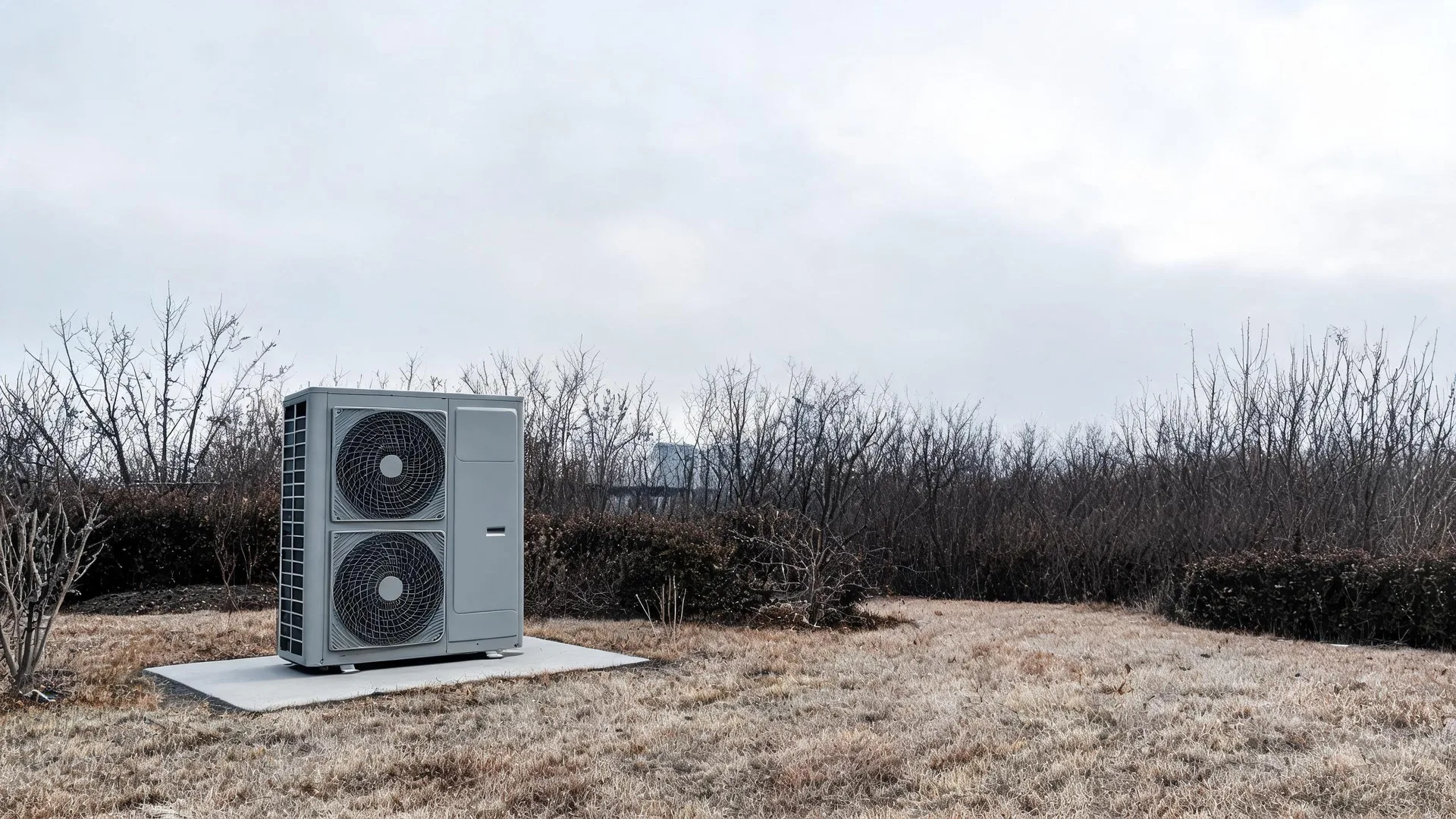
A gray residential air conditioning condenser unit mounted on a concrete pad outdoors, surrounded by green grass under a partly cloudy blue sky.

Get it looked at before July, not during it

Book the check for June. That's the one month before the system has to carry the summer, and it's the easiest time to get on a tech's schedule since the rush hasn't started yet. A check done in July or August is still worth doing, but by then the system has already had to perform on whatever shape it was in.

A dirty filter chokes the whole system

When the filter clogs, less air moves across the evaporator coil. That coil can get cold enough to freeze over, and once it's coated in ice it stops absorbing heat at all. The system keeps running but stops cooling the house. A filter is the cheapest part in the whole system and the one most likely to cause a breakdown if it's ignored.

A clogged drain backs up into the house

The evaporator coil pulls moisture out of the air as it cools, and that water has to go somewhere. It runs off through a drain line into a pan and out the house. Algae and dirt build up inside that line and block it over time. Once it's blocked, the pan fills and overflows, sometimes straight down through the ceiling below. A tech clears that line during a tune-up so it's not the thing that fails first.

Overhead view of an outdoor AC condenser unit on a concrete pad next to a house with a dark shingle roof.

Book your AC tune-up in June, before homes here start needing cooling in July.

  1. Jan
  2. Feb
  3. Mar
  4. Apr
  5. May
  6. Jun
  7. Jul
  8. Aug
  9. Sep
  10. Oct
  11. Nov
  12. Dec

A tune-up checks the refrigerant charge, cleans the coils, tests the capacitor and tightens the electrical connections.

A full tune-up also means checking the capacitor and contactor before they fail outright. The capacitor gives the compressor and fan motor the jolt they need to start. A weak one won't always show symptoms sitting still, it shows up when the system struggles to start on a hot afternoon and then quits. A tech checks it with a meter, not a glance. The contactor is the switch that sends power to the compressor, and its contacts pit and burn a little every time it cycles. Left alone, a worn contactor can stick closed or fail to close at all. Checking both takes a few minutes and catches the kind of failure that otherwise looks sudden.