





A row of illuminated white colonial houses along a road photographed at dusk.

AC Maintenance in Portsmouth, NH

Tell us about the job

Takes about a minute. No obligation.

Tune-up, service, or cleaningCentral ACRockingham County, NH
Step 1 of 2

What ZIP code is the job in?

A dirty filter is where most AC trouble starts. Airflow drops, the evaporator coil gets colder than it should, and eventually it ices over. Once that coil is frozen, the system can't pull heat out of the air no matter how long it runs. The outdoor coil matters too. It has to shed heat into the air outside, and when it's coated in dust or grass clippings, that heat has nowhere to go, so the compressor works harder and runs hotter than it was built to. Then there's the condensate drain, the part people forget about entirely. It's just a small line carrying water away from the indoor coil, but when it clogs with algae, that water backs up into the pan and either trips a safety switch or spills out where it shouldn't. A tech checking these during a maintenance visit is really just making sure the system can breathe, cool, and drain the way it was designed to.

2 months
July through August, your air conditioner is on duty
80°F
the average summer afternoon it cools against
29 hail events
in ten years, and hail bends the fins on outdoor coils
103 wind events
in ten years, and wind drives debris into outdoor units
Isometric cutaway illustration of a single-story house showing interior ductwork and an air handler connected by lines to an outdoor condenser unit on a pad beside the building.
Your air conditioner works hardest from July through August.

NOAA nClimDiv, 1991–2020 normals

A compressor that runs hot all summer wears out from the inside, long before it ever trips a breaker.

Skip enough maintenance visits and the system doesn't break all at once, it just stops lasting as long as it should.

Half the homes here were built in 1983 or later, so a lot of these systems still have years of work left in them

Half the homes here were built by 1983
Cooling runs July through August
Summer afternoons average 80°F

One visit a year covers it. A tech checks the refrigerant charge, tests the capacitor and contactor, and clears the coils and drain line before summer puts any real load on the system. There's no reason to do it more often than that, and doing it less means problems get found after they've already cost you a hot week with no AC. Electricity here runs 23.4 cents per kilowatt-hour, among the higher rates around, so a system that's lost efficiency from a dirty coil or a low charge shows up on the bill before it shows up as a breakdown. A yearly check catches that drift early, while it's still a adjustment and not a repair.

Book the AC check in June, before July starts the clock

Cooling here only runs two months, July and August, and July is when it starts cold and gets put straight to work. June is the window to have it looked at, before that first hot stretch. A system checked while it's idle gets any weak part found before that part has to prove itself.

Find a contractor
An outdoor air conditioning condenser unit mounted on a concrete pad surrounded by gravel, photographed against a partly cloudy blue sky.

A new system is the easiest one to keep that way

A system installed new starts its working life with nothing worn yet, no weak capacitor, no drifted charge. That's the easiest point for a yearly check to start too. Catching a system in good shape and keeping it there takes less than catching one that's already drifted and pulling it back. Years from now, whoever looks at this system will have a full record of it running right, one summer at a time, instead of guessing where it stands.

Change the filter yourself

A filter is the one part of the system built for the homeowner to handle. Check it monthly, and swap it when it looks gray or clogged rather than on a fixed schedule. A filter left too long is what starves the coil of airflow and leads to that frozen coil between visits.

Keep the outdoor unit clear

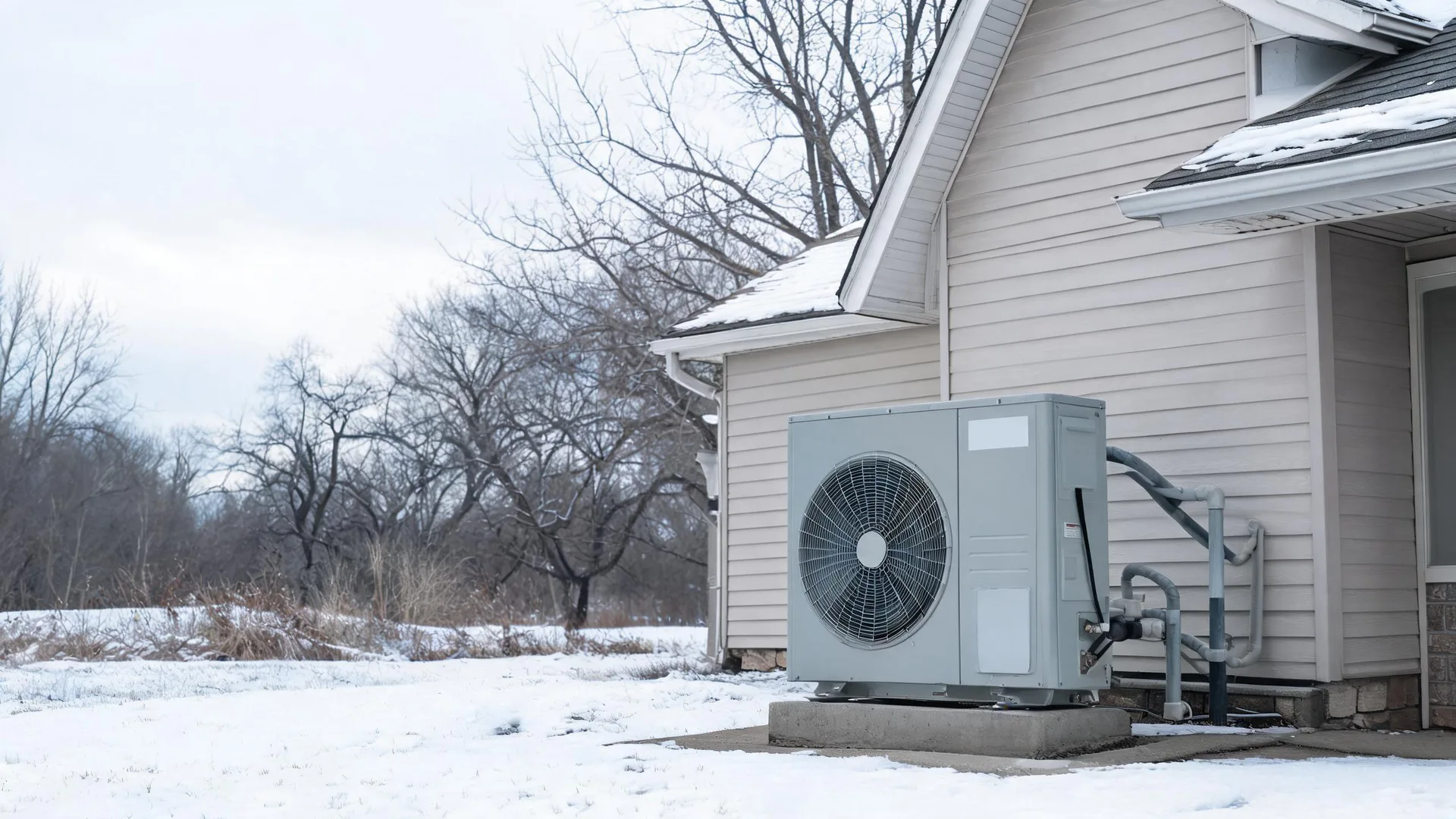
The outdoor coil needs open space to shed heat, so keep grass clippings, leaves and planting away from it. Rinse it off with a hose if it looks dusty. Anything beyond that, like the refrigerant charge or the electrical parts, is a tech's job, not something to open up and check yourself.

An outdoor air conditioning condenser unit mounted on a concrete pad next to a blue-sided residential house at sunset.

Book your AC tune-up in June, before homes here start needing cooling in July.

  1. Jan
  2. Feb
  3. Mar
  4. Apr
  5. May
  6. Jun
  7. Jul
  8. Aug
  9. Sep
  10. Oct
  11. Nov
  12. Dec

A tune-up checks the refrigerant charge, cleans the coils, tests the capacitor and tightens the electrical connections.

A tune-up starts with a gauge on the refrigerant charge. Too little and the system pulls less heat out of the air each cycle, so it runs longer to reach the same temperature. A tech also pulls the capacitor and checks it against its rating, since a weak one makes the compressor strain to start and shortens its life from there. The contactor gets a look too, because the contacts burn and pit a little every time they close, and a pitted contact means the outdoor unit doesn't always fire when it should. Coils get cleared, the drain line gets flushed, and the whole system gets run through a cycle to see that it actually cools and shuts off the way it's supposed to. None of this is guesswork. Every part has a number it should read, and the visit is about finding the one that doesn't.