







A row of illuminated white colonial houses with black shutters and a stone wall along a road at dusk.

AC Repair in Conway, NH

Tell us about the job

Takes about a minute. No obligation.

RepairCentral ACCarroll County, NH
Step 1 of 2

What ZIP code is the job in?

A compressor that's low on refrigerant keeps drawing current trying to finish a job it can't. That heat has nowhere to go but back into the compressor itself, and run long enough in that state, the windings burn out. A failing capacitor causes the same kind of damage a different way. It can't hold the charge the motor needs to start clean, so the motor strains on every cycle, and that strain wears out bearings and windings that would otherwise have lasted. Even a dirty coil makes the system work harder than it should, and that extra work shows up as heat somewhere else in the system. None of these get better by running the AC more. They get worse.

1 months
July through July, your air conditioner is on duty
77°F
the average summer afternoon it cools against
37 hail events
in ten years, and hail bends the fins on outdoor coils
70 wind events
in ten years, and wind drives debris into outdoor units
Isometric line illustration of a cutaway house showing interior rooms with furniture, ceiling ductwork, an indoor air handler, and an outdoor condenser unit connected by lines.
Your air conditioner works hardest from July through July.

NOAA nClimDiv, 1991–2020 normals

Half the homes in Carroll County were built in 1982 or later.

A system in a newer Conway home usually still has working life left, so a repair call makes sense before anything bigger gets considered.

A mild climate here means a broken part is the problem, not the weather

Power costs 23.4 cents a kWh statewide
Cooling runs July through July
Summer afternoons average 77°F
One month of work a yearCooling runs in July here. June is when a weak part gets found before the heat does.

A tech starts outside at the condenser, checking whether the fan runs and the compressor is drawing the current it should. Low refrigerant shows up as frost on the line or a hissing sound before the gauges ever come out, so that gets checked early. Inside, the evaporator coil gets a look too, since restricted airflow from a dirty filter or a blocked return can mimic a refrigerant problem without actually being one. The capacitor gets tested under load, not just by sight, because a capacitor can look fine and still be too weak to start the motor cleanly. Electrical connections get checked for corrosion or looseness, since a loose wire can cause the same short cycling as a failing part. By the time the tech has a reading on all of it, there's usually one clear answer, not a guess.

Light duty here makes most repairs worth doing

July is the only month this system has to work. With afternoon highs averaging 77 across the summer, it isn't straining against real heat the way units further south do. A repair on a system with that light a load is usually worth doing. Get it looked at.

Find a contractor
A man in a cap, dark long-sleeved shirt and worn brown work pants walks up porch steps toward a green front door, carrying a canvas tool bag in his right hand, with a potted plant beside the door.
An outdoor residential air conditioning condenser unit mounted on a concrete pad, surrounded by gravel with a blue sky in the background.

Check the age before you replace anything

If your AC came with the house and the house is newer, that's worth finding out before anything else. Check the permit or the paperwork from when you bought it. A system that young has little reason to be replaced over one repair, so get the part fixed and move on.

Check the filter first

A dirty filter chokes airflow across the evaporator coil, and the system reacts like it's low on refrigerant even when it isn't. Pull the filter out and hold it to the light. If you can't see through it, that's likely part of the problem, and it's worth ruling out before anyone comes out.

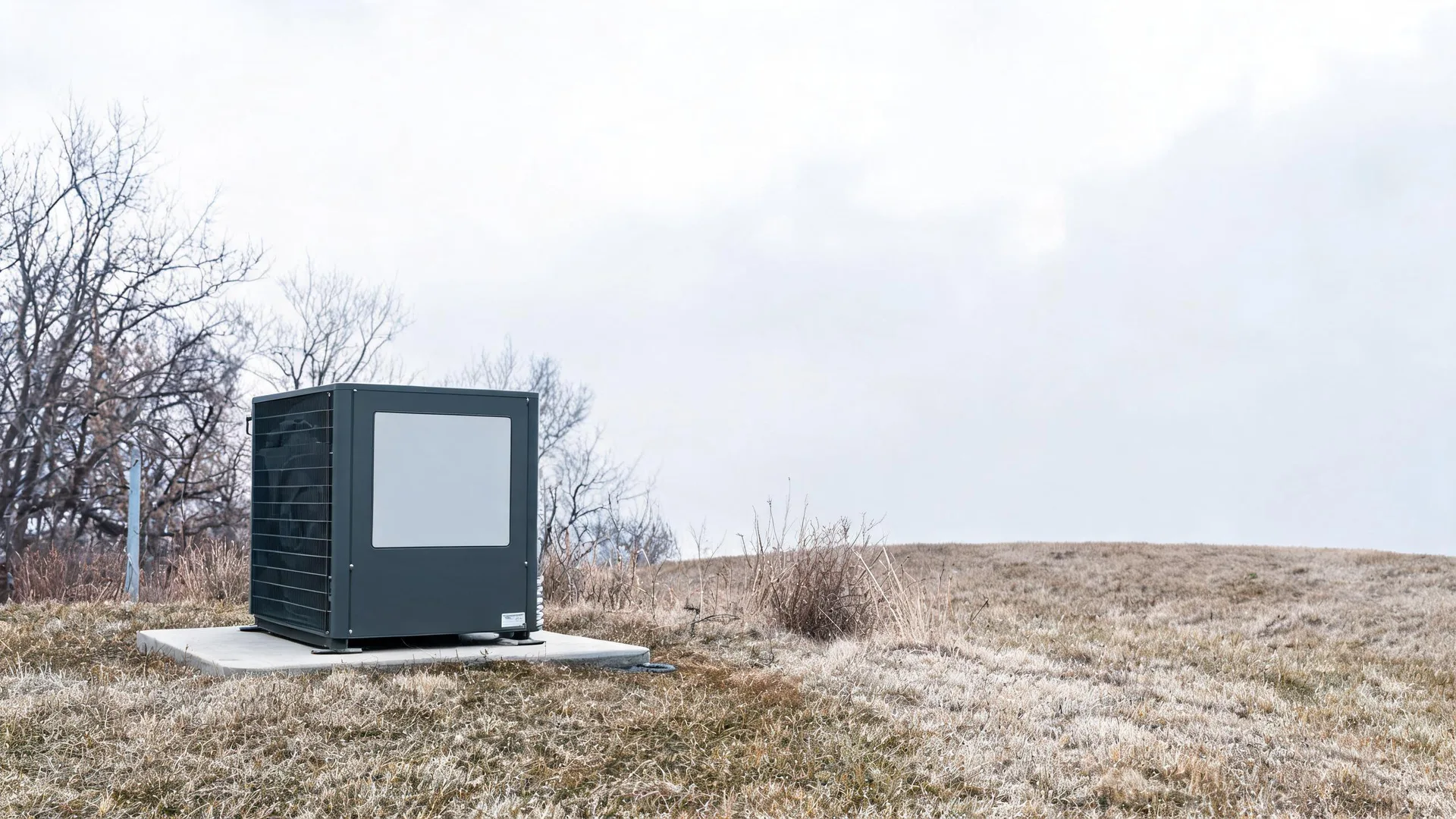
Check the outdoor unit for a reason, not just a look

Walk out to the condenser and make sure nothing is blocking it, no leaves packed against the fins, no grass clippings, nothing sitting on top of it. Also check the breaker. If the outdoor fan isn't running at all, sometimes it's just been tripped, and flipping it back is all it needed.

An outdoor air conditioning condenser unit installed beside the exterior wall of a blue vinyl-sided house at sunset.

A new air conditioner would save little on running costs in Carroll County, so the repair decision comes down to the unit's condition.

  • A new one at the federal minimum, 13.4 SEER2$140 a year
  • An older air conditioner$150 a year

Estimates for a typical Carroll County home, compared with an older unit built to the previous federal minimum, from EIA household energy data, New Hampshire fuel prices and NOAA climate normals. Your home will differ.

Repair makes sense when a part like a capacitor or contactor has failed.

Replacement makes sense when the compressor has failed or the system uses R-22 refrigerant, which is no longer made.

A compressor or coil failure isn't always a death sentence for the system, and it isn't always worth saving either. The question is what broke and what it took down with it. A single bad part, a capacitor, a contactor, a fan motor, is a clean repair because nothing else was damaged on the way down. A compressor that failed from running low on charge for a long stretch is different, since the heat that killed it often damages the metering device and leaves contaminants in the line set too. At that point you're not pricing a part, you're pricing a cleanup. Age matters less than what the failure actually touched.