A weathered wooden picket fence runs along a mown lawn in front of a row of two-story light-colored siding townhouses, with large tree branches overhanging under an overcast sky.

AC Repair in Laconia, NH

Tell us about the job

Takes about a minute. No obligation.

RepairCentral ACBelknap County, NH
Step 1 of 2

What ZIP code is the job in?

A dirty condenser coil makes the whole system work harder

The outdoor unit pulls air through a metal coil to dump heat from the house. When that coil is caked with grass clippings, cottonwood or dust, it can't shed heat the way it should. The compressor runs longer to make the same cooling, and that extra strain is what burns it out early.

A weak capacitor shows up as a system that won't start

The capacitor gives the compressor and fan motor the jolt they need to get going. Capacitors wear out from heat and age, not from any one thing you did. If the outdoor unit hums but the fan doesn't spin, or the whole unit stays silent when it should kick on, a worn capacitor is usually why.

2 months
July through August, your air conditioner is on duty
79°F
the average summer afternoon it cools against
11 hail events
in ten years, and hail bends the fins on outdoor coils
38 wind events
in ten years, and wind drives debris into outdoor units
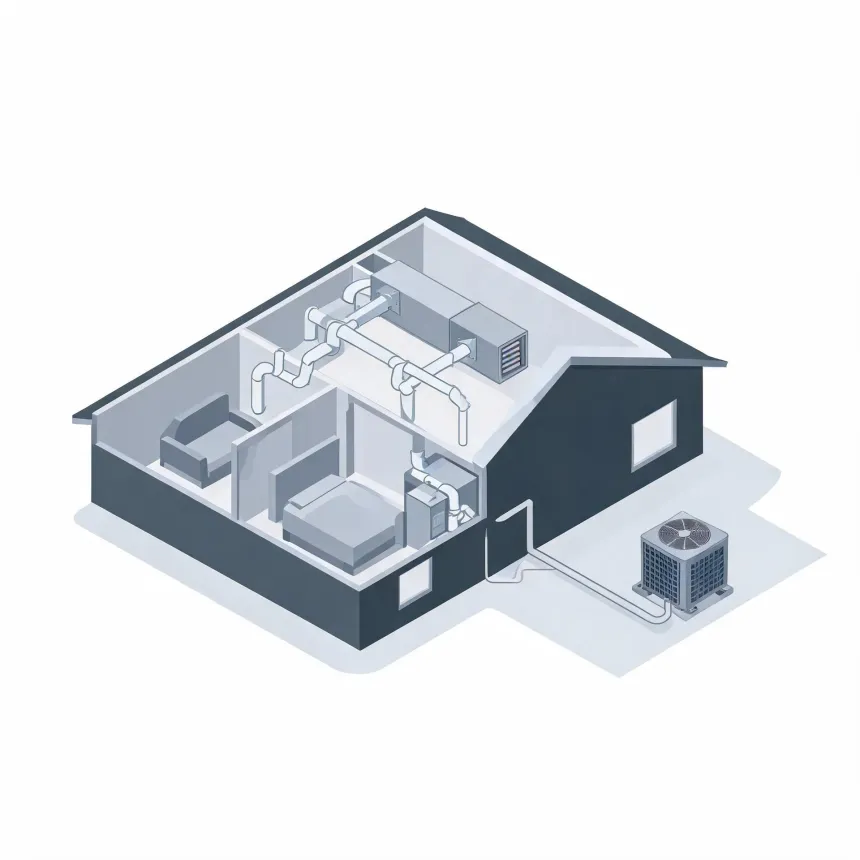
Isometric cutaway illustration of a house showing interior ductwork, an air handler and furnace unit, and an outdoor condenser connected by lines outside the wall.
Your air conditioner works hardest from July through August.

NOAA nClimDiv, 1991–2020 normals

A diagnostic starts with the thermostat and the breaker, not the outdoor unit.

A tech checks what's easy to miss before opening up the condenser, so the visit doesn't end in a guess.

Belknap County doesn't put much extra strain on an AC system

96 severe weather events from 2015 to 2024
22% of homes statewide lost power a day or more in 2024
38 damaging wind events from 2015 to 2024

This AC isn't working as hard as it would somewhere with a long, hot summer, so a repair now is usually just a repair. A compressor or coil that's been run less gets to a breaking point later, not sooner. New Hampshire electricity ran 23.40 cents per kilowatthour in 2024, on the high side, so a system struggling to cool is adding to the bill every day it sits unfixed. That cost keeps climbing whether the unit is new or old. None of that changes how a capacitor or coil actually fails. Those wear out on their own schedule, not on the county's.

It's usually worth repairing

It has an easier job here than in most places, so your air conditioner is often in decent shape. Repair is usually worth it.

Find a contractor
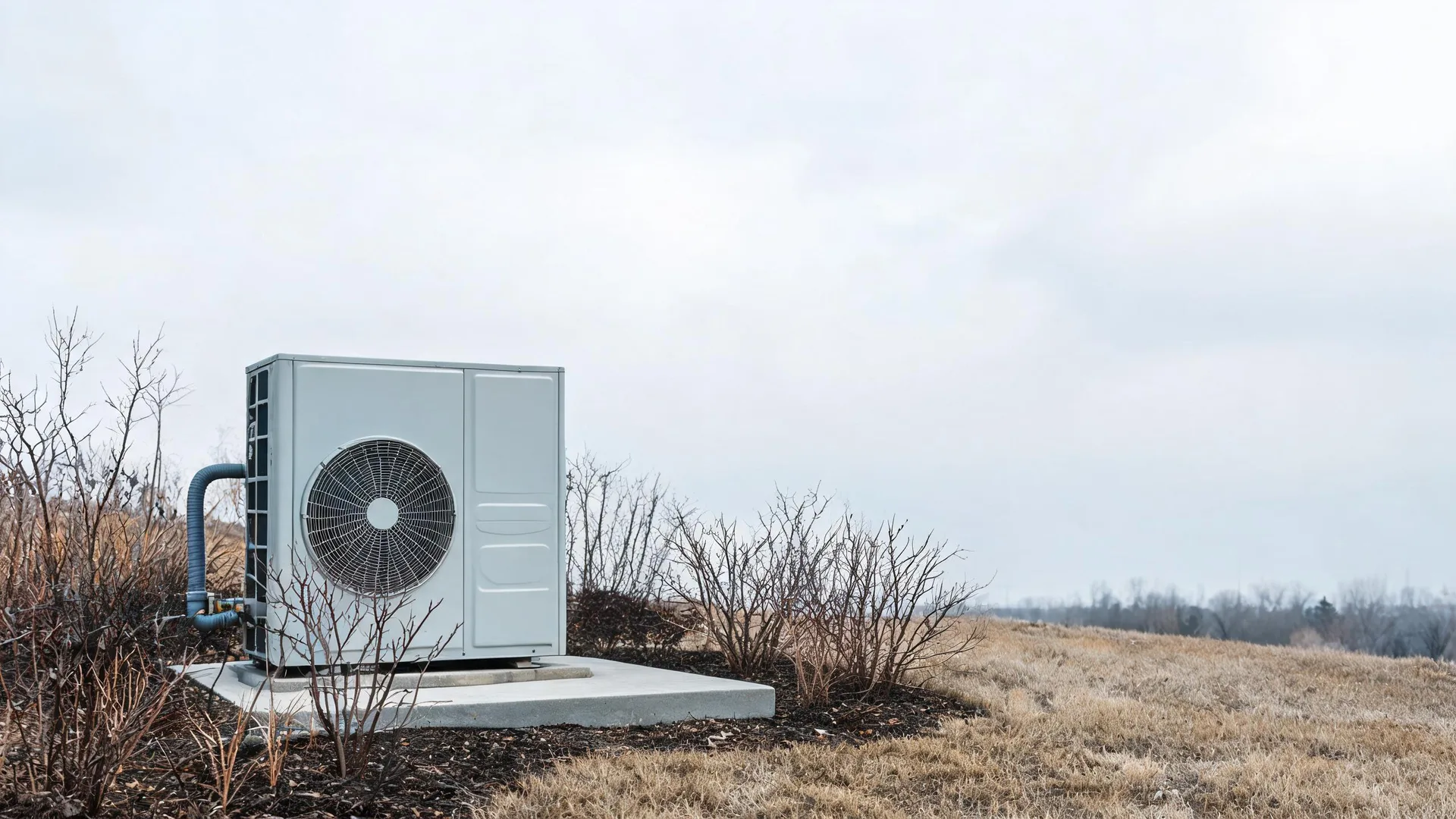
A gray cylindrical air conditioning condenser unit mounted on a concrete pad next to a light-colored vinyl-sided house exterior.

What to check before the call

A few things are worth checking first. Look at the thermostat. Make sure it's set to cool and the setpoint is below room temperature, since a setting bumped by accident looks the same as a dead system from across the room. Check the breaker next. A tripped breaker means no power reaches the outdoor unit at all, so it won't hum or click or do anything. Pull the air filter and hold it up to a light. If dust blocks the light, airflow is choked, and that alone causes weak cooling or a coil that ices over. Walk outside and look at the condenser. Grass clippings, leaves or cottonwood built up against the coil are safe to clear away, and it's the same first step a tech would take. If the indoor coil already has ice on it, don't run the system hoping it clears on its own. Shut it off and let it thaw before anyone opens it up.

A refrigerant leak gets worse the longer it runs

A system low on refrigerant still tries to cool the house, and the compressor keeps working against a charge it doesn't have. That lets the compressor run hotter than it should, and heat is what wears it out. Shutting it off and getting the leak found stops that clock. Left running, a simple leak repair can turn into a compressor replacement.

Ice on the coil means stop, not wait and see

When airflow or refrigerant is low, the indoor coil can drop below freezing and start icing over. Once ice forms, it blocks the airflow further, so more ice builds and less cooling gets through. Running the system with a frozen coil can push liquid refrigerant back into the compressor, which it isn't built to handle. Turning the system off and letting it thaw is the right move before anyone opens it up.

An outdoor central air conditioning unit mounted on a concrete pad beside a blue-sided house at sunset.

A new air conditioner would save little on running costs in Belknap County, so the repair decision comes down to the unit's condition.

  • A new one at the federal minimum, 13.4 SEER2$200 a year
  • An older air conditioner$210 a year

Estimates for a typical Belknap County home, compared with an older unit built to the previous federal minimum, from EIA household energy data, New Hampshire fuel prices and NOAA climate normals. Your home will differ.

Repair makes sense when a part like a capacitor or contactor has failed.

Replacement makes sense when the compressor has failed or the system uses R-22 refrigerant, which is no longer made.

A repair makes sense when the fix is one part doing one job. A capacitor, a contactor, a fan motor. A tech can point to what failed and replace just that. Replacement starts to make sense when the compressor itself is the problem. That's the most expensive part in the system, and the labor to swap it isn't far off the cost of a new unit. Age matters too, not because a number says so, but because older systems use a refrigerant that's being phased out. Topping off a leak in one of those gets harder to source every year. If a system has needed a few different repairs over a couple of years, that pattern is worth mentioning to the tech. It says something a single visit can't.