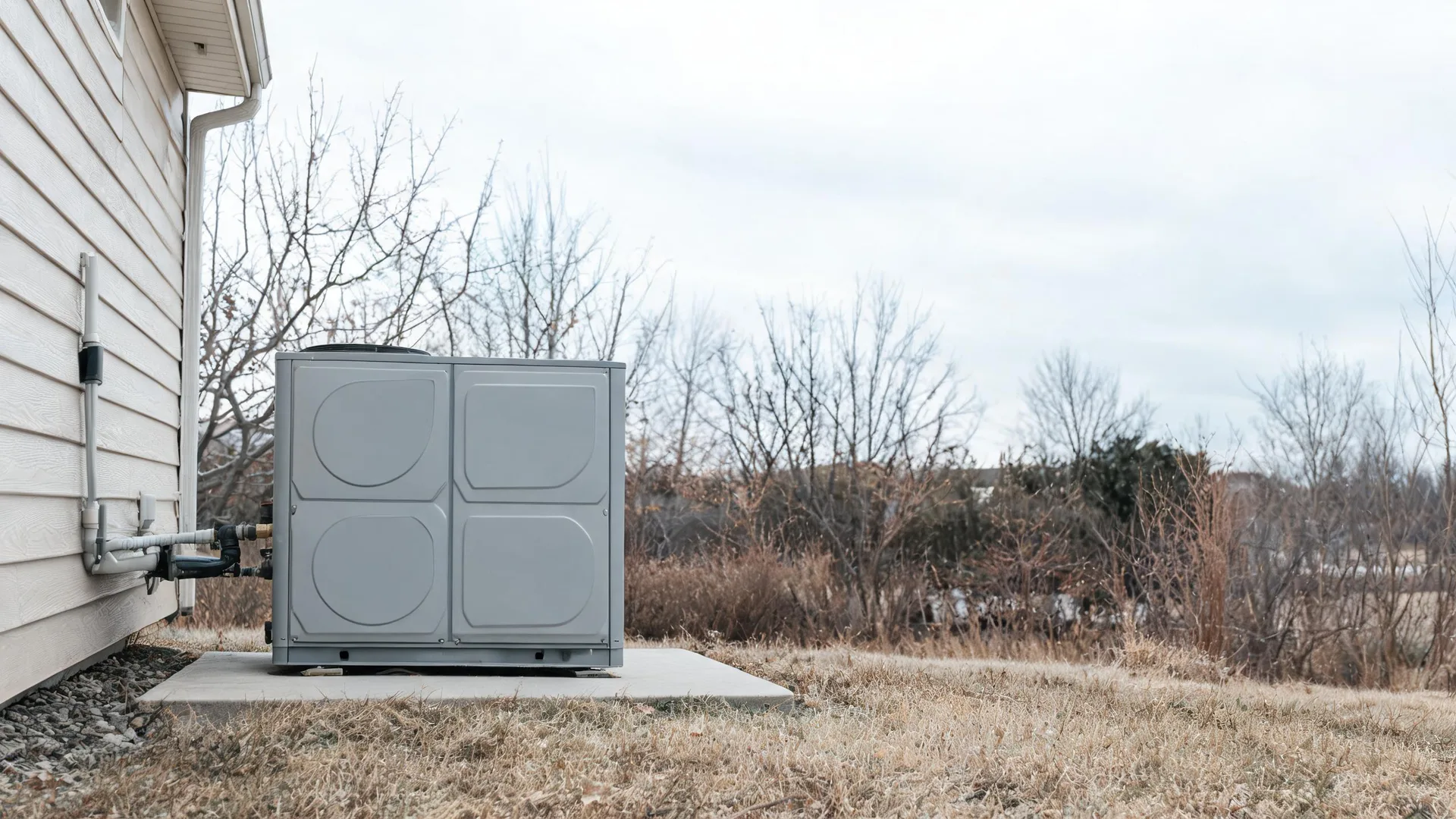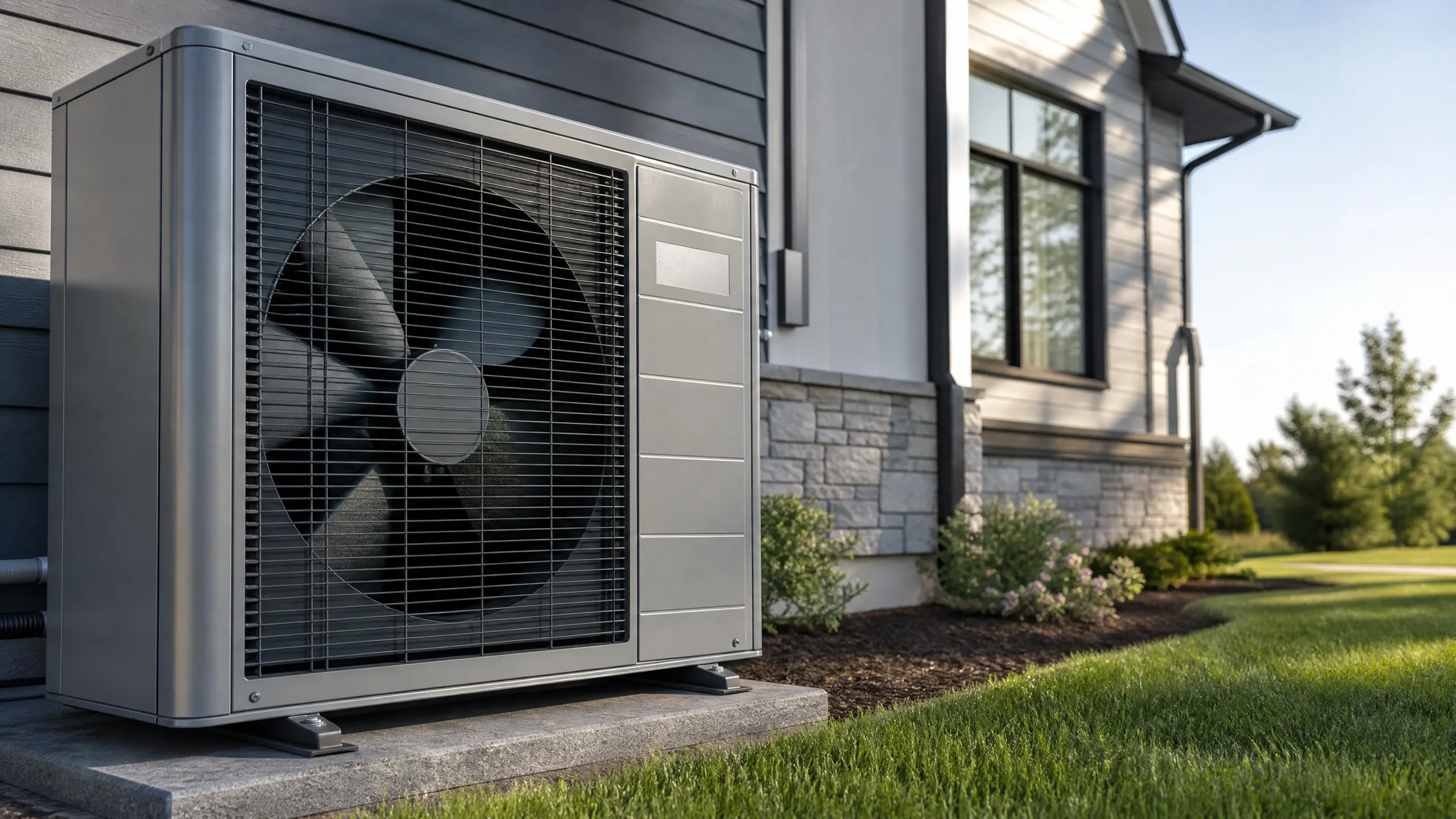
A grey heat pump outdoor unit mounted on a concrete pad against the exterior wall of a house with grey siding and stone veneer.

Heat Pump Repair in Claremont, NH

Tell us about the job

Takes about a minute. No obligation.

RepairHeat PumpSullivan County, NH
Step 1 of 2

What ZIP code is the job in?

Claremont winters work the heat pump hard

Overnight lows average 13°F through December, January and February, and the system runs most of the day to keep up. That's normal for a heat pump here. Parts wear the way they're expected to, and a breakdown in the cold is usually a known failure, not a mystery.


The cause is usually something specific

A heat pump that's short cycling, blowing cold air, or icing over and not defrosting has a specific part behind it, a failed defrost board, a low charge, a worn contactor. A contractor who finds that part fixes the problem. Guessing at it just means another visit.

9 months
September through May, your system heats
1 months
July through July, it cools
13°F
the average winter night it heats against
77°F
the average summer afternoon it cools against
Isometric line illustration of a cutaway single-story house showing interior rooms with furniture and attic ductwork connected to an outdoor condenser unit beside the building.
Your system heats September through May and cools July through July.

NOAA nClimDiv, 1991–2020 normals

A failing capacitor doesn't stay a capacitor problem for long

Left running weak, it drags the compressor down with it, and the compressor is most of what the unit is

At 23.4 cents a kilowatt-hour, a heat pump running wrong costs you every day you wait

Power costs 23.4 cents a kWh statewide
58 damaging wind events from 2015 to 2024
14 hail events from 2015 to 2024

Every day it runs wrong is a day you pay full price for a system that isn't working

A heat pump losing charge or running a bad part does not use less power for doing less work. It keeps drawing current at 23.4 cents a kilowatt-hour while it fails to heat the house. Getting the actual cause found and fixed stops that.

Find a contractor
A man in a gray long-sleeve shirt and brown pants, seen from behind, carries a canvas tool bag up wooden steps toward a green front door.
A dark gray heat pump unit mounted on a concrete pad next to a house with gray siding and a stone veneer wall.

The machine tells you before it quits

A heat pump that's working right cycles on, runs for a while, and shuts off. One that needs attention starts acting on its own schedule. It short cycles, kicking on and off every few minutes instead of running a full cycle. It runs constantly and never seems to catch up. It blows air that feels cool instead of warm, even though the system is calling for heat. Outside, the coil ices over, and the unit should defrost itself on a timer. If that frost builds up and stays, the defrost board or the reversing valve isn't doing its job. Listen to it too. A hard clunk when it switches between heating and cooling points to that reversing valve sticking. A hum with no startup points to a failed capacitor or a seized compressor. None of these fix themselves, and running a system in one of these states just wears the next part down with it.

A diagnostic visit starts with the thermostat, not the outdoor unit

A contractor checks the thermostat call first, heat or defrost, to see what the system is actually being told to do. Then comes the refrigerant charge, the readings at the air handler and outdoor unit, and a check of the contactor and capacitor for wear. Each reading rules something in or out before any part gets replaced.

The fix only starts once the cause is confirmed

Finding the failed part is only part of the visit. A contractor still checks whether anything else got damaged alongside it, since a weak capacitor left running too long can take a compressor down with it. Once the cause is confirmed, the repair itself is usually straightforward. Chasing a symptom without confirming the cause is how the same complaint comes back.

Before anyone comes out, there are a few things worth checking yourself. Look at the thermostat first. Make sure it's set to heat and the temperature you want is actually above room temperature, since a setting bumped by accident looks exactly like a system that won't respond. Check the breaker for both the indoor air handler and the outdoor unit. A tripped breaker shuts the whole system down with no warning sign beyond silence. Walk outside and look at the unit itself. If snow or ice has built up around the base or packed in on top, the airflow gets blocked and the system can't do its job no matter what's wrong or right inside it. Check the air filter too. A filter clogged with dust chokes off airflow and can make a perfectly good system act like it's failing. None of this fixes a bad capacitor or a low charge, but it rules out the easy explanations before anyone pays for a diagnostic visit.

A heat pump that's failed once isn't necessarily done. Compressors, boards and valves wear on their own schedules, and a system that's otherwise sound is usually worth fixing when one of them finally gives out. What changes the math is age and pattern. A unit that's needed a different repair every season is telling you something a single part replacement won't fix. A compressor failure late in a system's life is a different call than a capacitor failure early in it, since the compressor is most of what the unit is. Ask what's actually being replaced and how that part relates to the rest of the system before deciding either way. A contractor who's found the real cause can tell you whether it's a repair or the start of a pattern.