






A new wooden picket fence curves across a mown lawn in front of a row of two-story gray-sided houses, with large leafy trees overhead and an overcast sky.

Heat Pump Repair in Conway, NH

Tell us about the job

Takes about a minute. No obligation.

RepairHeat PumpCarroll County, NH
Step 1 of 2

What ZIP code is the job in?

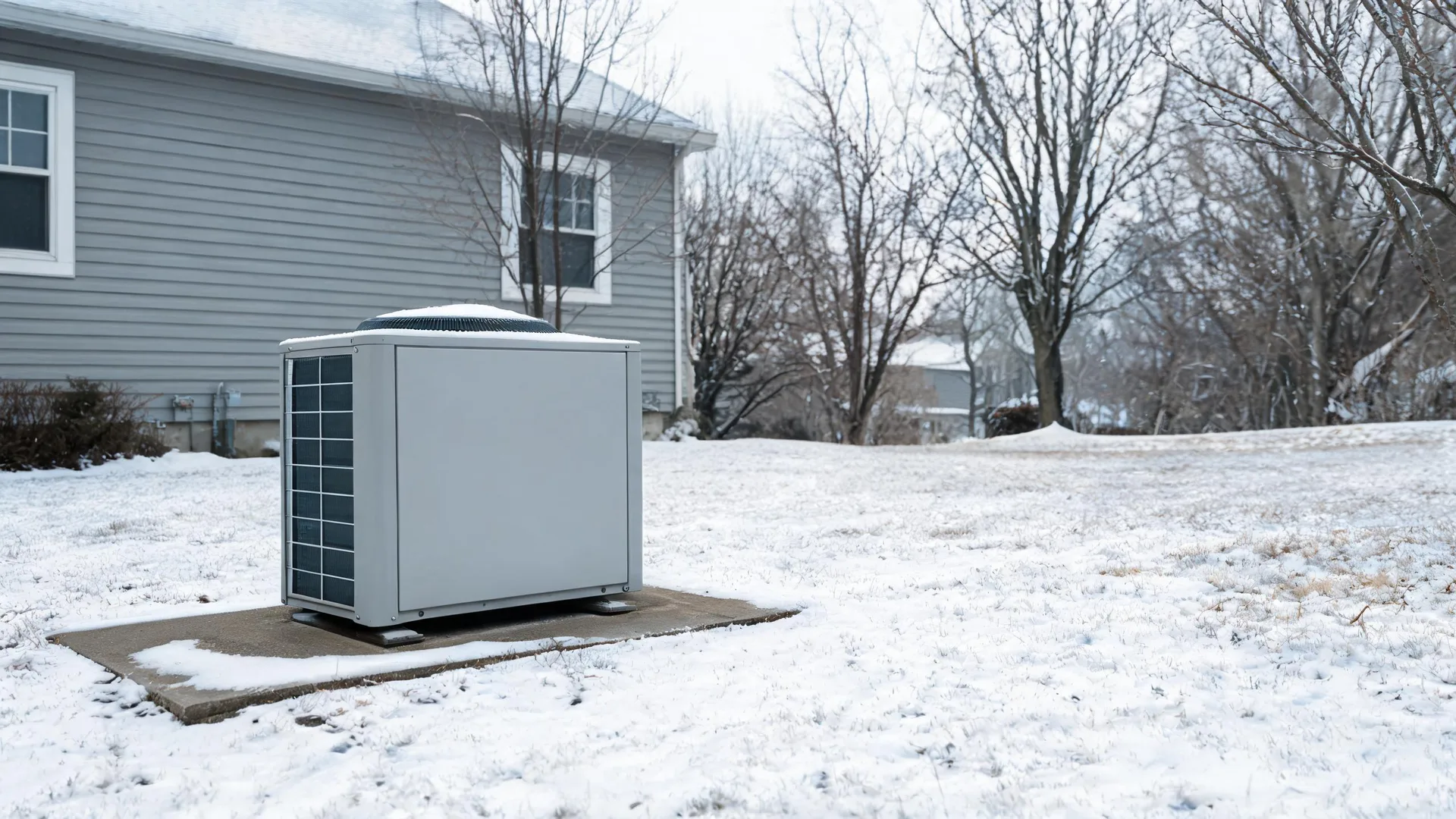
Carroll County sees rough weather on a regular basis. Winter storms alone hit the county 103 times between 2015 and 2024, with damaging wind and hail adding to that count. A heat pump's outdoor unit sits right in the path of all of it, with coils and fan blades exposed to whatever blows through. Hail can bend the fins, wind-driven debris can nick the coil, and ice can work into the cabinet. None of that always stops the unit from running, so it's worth having it looked at after a bad storm even if it still turns on.

9 months
September through May, your system heats
1 months
July through July, it cools
12°F
the average winter night it heats against
77°F
the average summer afternoon it cools against
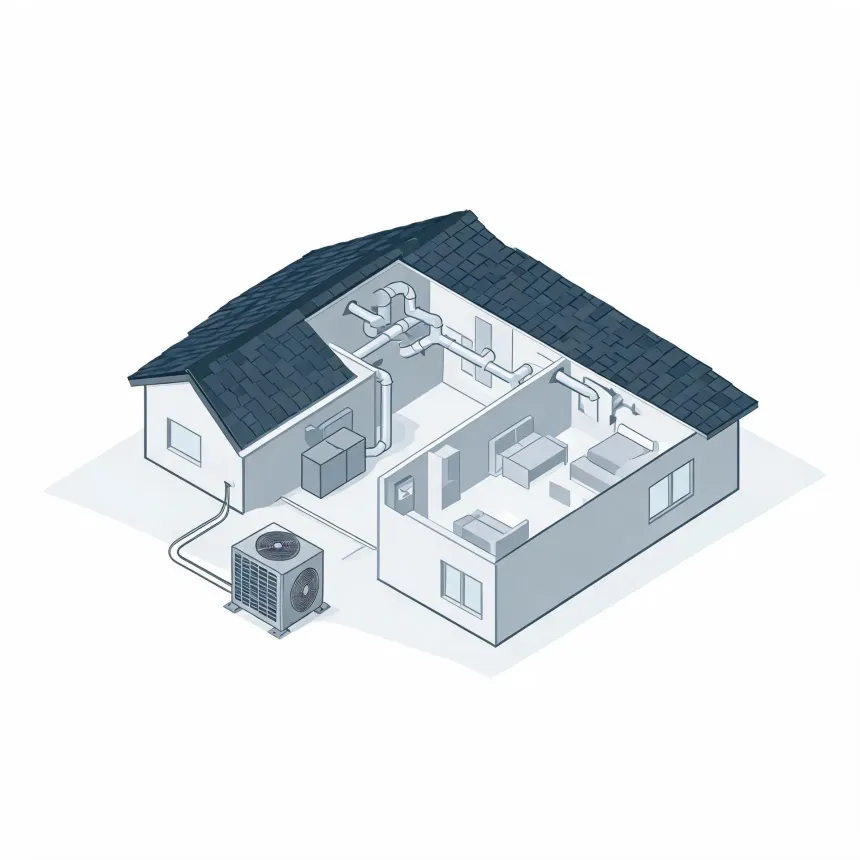
Isometric cutaway illustration of a single-story house showing interior rooms, ceiling ductwork, an indoor air handler, and an outdoor condenser unit connected by lines on the ground.
Your system heats September through May and cools July through July.

NOAA nClimDiv, 1991–2020 normals

Half the homes in Carroll County were built in 1982 or later.

A heat pump that came with a newer Conway house still has years left in it, so repair is usually worth it.

Heat pumps break in the first cold snap, not the middle of winter

Cooling runs July through July
Heat runs September through May
70 damaging wind events from 2015 to 2024
Electricity here costs moreNew Hampshire homes paid 23.40 cents per kilowatt-hour in 2024, so a heat pump running wrong costs you every month it goes unfixed.

A diagnostic visit starts outside at the unit itself. The tech checks the refrigerant charge, looks at the coil for bent fins or buildup, and makes sure the fan spins freely and the defrost cycle is doing its job. Inside, they check the air handler, the filter, and the thermostat signal, since a heat pump that won't heat sometimes has nothing wrong with the outdoor unit at all. Electrical readings come next. The capacitor gets tested, the contactor gets checked, the wiring to the compressor gets looked over. Most of this is done with gauges and a multimeter, not guesswork. By the end the tech can tell you which part failed and why, not just that something did.

Had a storm come through? Get the outdoor unit checked

If the outdoor unit came through a storm with bent fins, a dent in the cabinet, or ice packed into it, get it looked at even if it's still heating. Damage like that doesn't always show up as a breakdown right away.

Find a contractor
A man seen from behind in a backward cap, dark jacket and tan work pants carries a waxed canvas tote bag up steps toward a green front door, with a potted shrub beside the entry.
A white mini-split heat pump outdoor unit mounted on a concrete pad beside a gray-sided house, surrounded by gravel and green shrubs.

Still within its working life

A heat pump installed with a newer Conway house is still a candidate for repair, not replacement. If yours is one of them, a failed capacitor or a bad control board is worth fixing rather than writing off. Ask the tech what's actually wrong before deciding to replace anything.

The reversing valve is the part unique to this machine

A heat pump relies on a reversing valve to switch between heating and cooling, and that valve can stick or fail from wear over years of switching back and forth. When it sticks, the system may run but blow the wrong temperature air, or get stuck in one mode no matter what the thermostat calls for.
Most failures still come from the usual suspects

Outside of the reversing valve, a heat pump fails the same way any AC or furnace does. A weak capacitor can't give the compressor or fan motor the jolt it needs to start. A dirty coil makes the whole system work harder and run longer than it should. A clogged filter restricts airflow and can ice up the indoor coil. None of these are unique to heat pumps, but a heat pump runs on both sides of these problems year round, so they tend to show up sooner.

Before calling anyone, a few things take just a minute to check. Look at the thermostat first. Make sure it's set to heat and the set temperature is actually above room temperature, since a setting bumped by accident looks exactly like a broken system. Go to the breaker panel and check that the indoor and outdoor breakers are both on, since a heat pump runs on separate circuits for each and one can trip without the other. Check the filter. If you can't see light through it, swap it, because a clogged filter can make a heat pump blow cold air or ice up even when nothing else is wrong. Walk outside and look at the unit itself. If the coil or the base is packed in ice or snow, that's worth telling the tech even if clearing it doesn't fix anything, since it points to a defrost cycle that isn't doing its job. If the system still won't heat right after all that, the problem is inside the equipment, not something you can check from outside it.

A heat pump that's struggling still tends to keep running, and that's the problem. If the compressor is low on charge, it keeps trying to pump refrigerant that isn't there, and it runs hotter than it's built for. A dirty coil makes the system pull harder to move the same amount of heat, and the compressor behind it takes the strain. Ice on the outdoor coil blocks airflow, so the unit works harder to do less, and the ice tends to build from there instead of stopping on its own. A part that's failing but still technically working will usually keep failing as long as it's asked to run, so the right time to get it looked at is when you notice something's off, not after it quits.