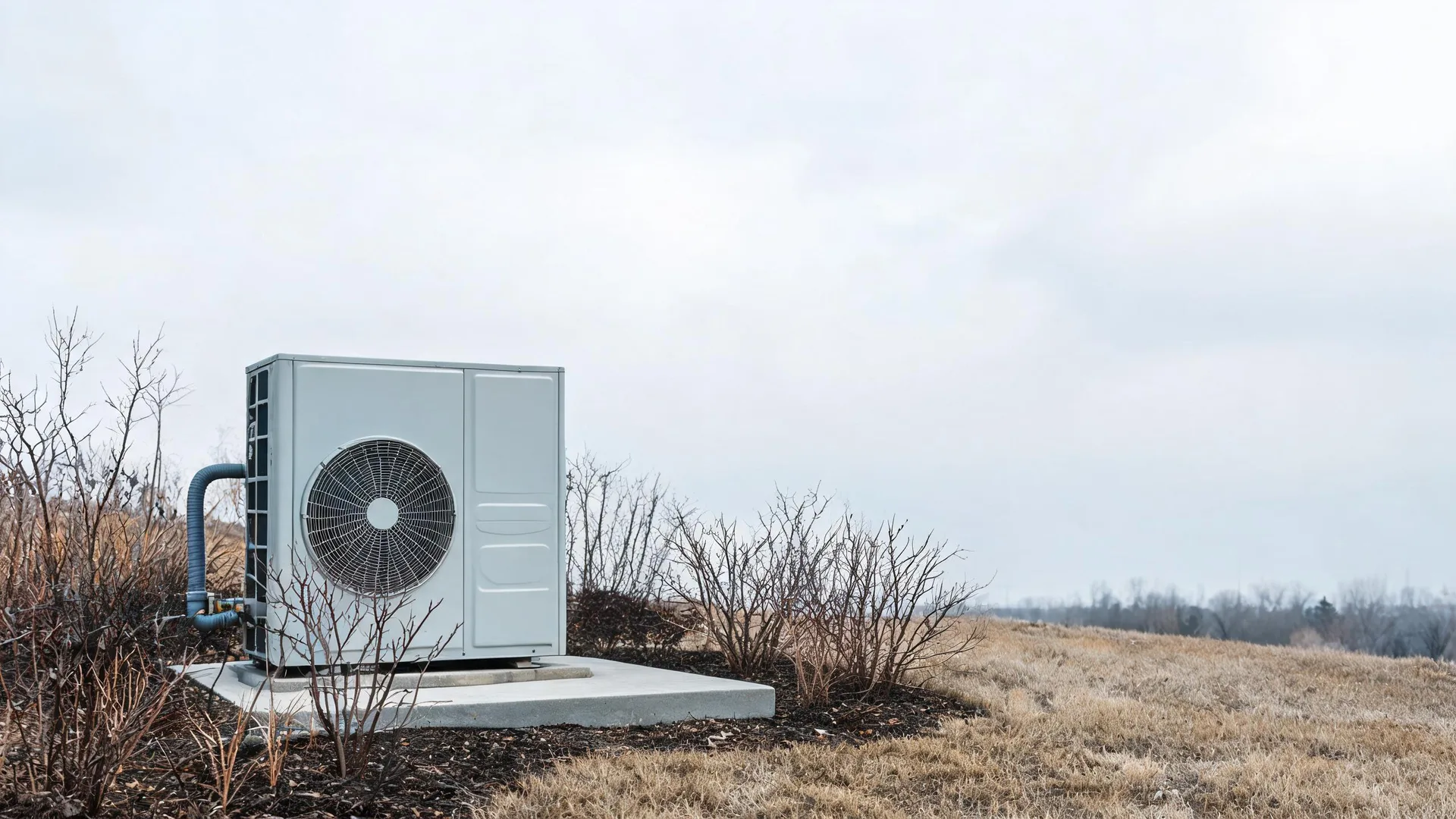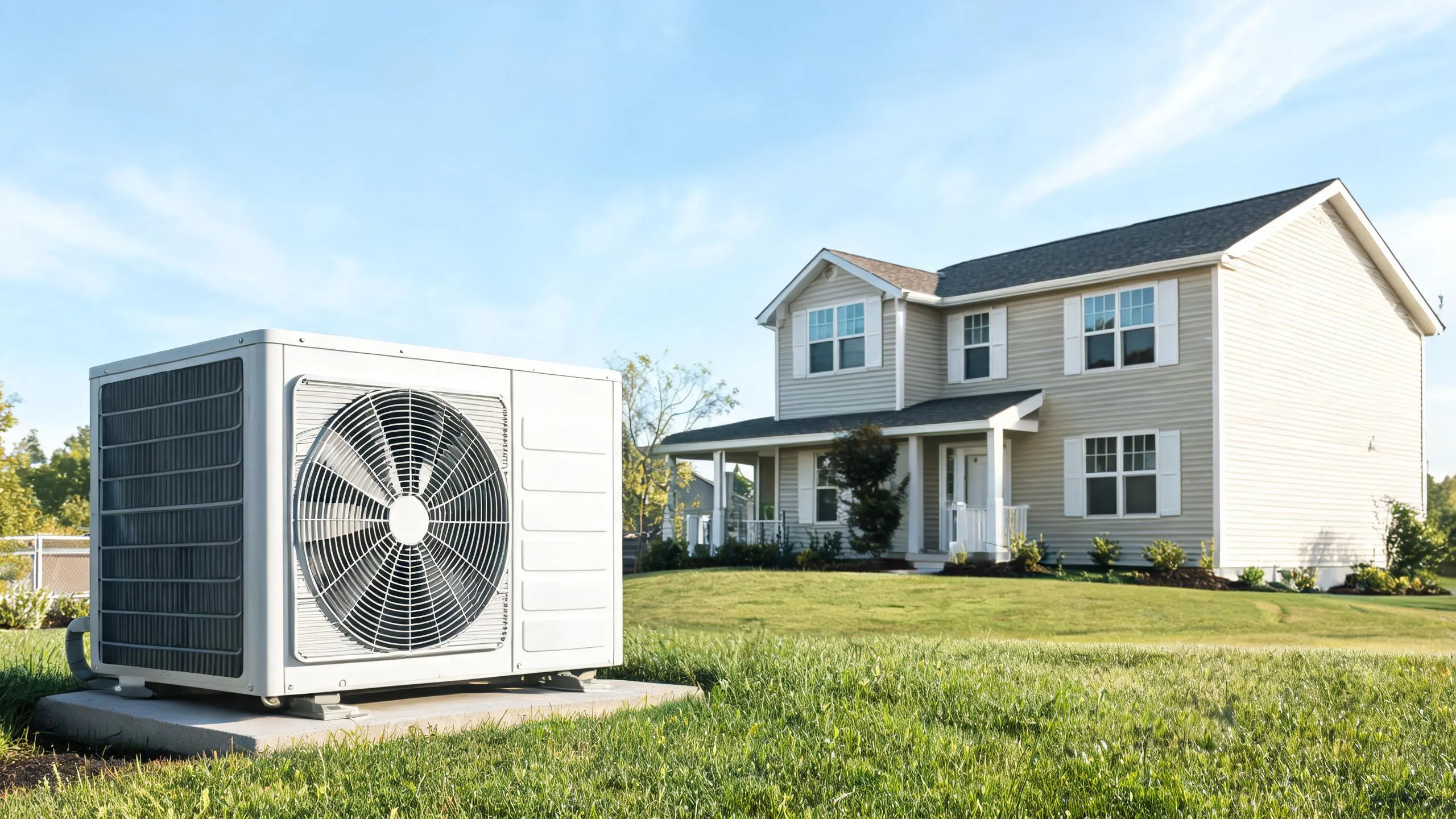
An outdoor heat pump unit mounted on a concrete pad in front of a two-story suburban house.

Heat Pump Repair in Dover, NH

Tell us about the job

Takes about a minute. No obligation.

RepairHeat PumpStrafford County, NH
Step 1 of 2

What ZIP code is the job in?

Winters here, not summers, do the work

Dover sits in a cool climate zone where heating carries the bigger load most of the year. Your heat pump spends more hours keeping the house warm than it does cooling it, and overnight lows average 16°F across December, January and February. That's steady, moderate demand, not the kind of constant strain a system sees in a much hotter or much colder place.

So a breakdown is usually fixable

A heat pump that hasn't been run ragged tends to have its parts in reasonable shape underneath whatever is failing. When something goes wrong here, it's more often a single part worn out or a setting off than a system worked past its limit. That makes repair a reasonable bet before anyone starts talking about replacement.

8 months
October through May, your system heats
2 months
July through August, it cools
16°F
the average winter night it heats against
79°F
the average summer afternoon it cools against
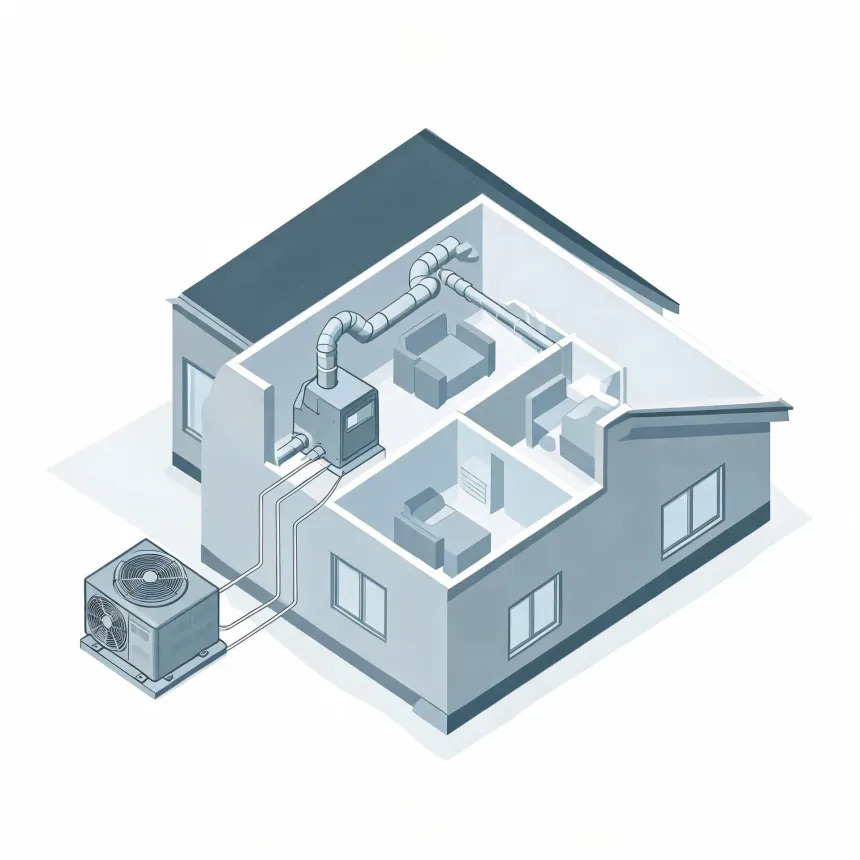
Isometric cutaway illustration of a two-room house showing an indoor air handler with ductwork connected by lines to an outdoor condenser unit on a pad.
Your system heats October through May and cools July through August.

NOAA nClimDiv, 1991–2020 normals

Half the homes in Strafford County were built in 1979 or later.

A heat pump installed with a newer house has usually got plenty of working life left to repair.

October is when a weak part finally gets asked to work

Cooling runs July through August
Heat runs October through May
43 damaging wind events from 2015 to 2024

New Hampshire electricity ran 23.40 cents per kilowatt-hour in 2024, among the highest rates in the country. A heat pump that's low on charge or struggling to defrost runs longer to make the same heat, and every one of those extra hours shows up on the bill at that rate. You won't see the fault itself. You'll see the number on the meter climb while the house still feels a little off. That gap is usually worth a service call before it turns into a bigger repair.

Nothing out of the ordinary here, just a repair to make

Strafford County sees its share of wind and winter storms, same as the rest of New Hampshire. None of it is hard enough on a heat pump to count against it. Whatever's wrong with yours is most likely one worn part or one setting, not a system beaten down by where it lives. Worth getting a tech out to find out which.

Find a contractor
A gray heat pump condenser unit mounted on a concrete pad against the gray lap-siding exterior wall of a house.

It's had an easy run. Get it looked at before that changes

Call someone out while it's still one part, not a system's worth of them. The moderate load here means whatever's failing had time to get old before it broke, which is usually easier to pin down and fix than damage from a system pushed past what it's built for.

A failing part rarely fails alone

A heat pump that's low on refrigerant will keep running, but the compressor works harder to move what heat it can, and that extra strain is what burns a compressor out. A frozen coil blocks airflow, so the system runs longer to reach the same temperature, which stresses the parts moving the air. The original problem is often a quick fix. What it causes if it keeps running is not.

The signs to stop on

Ice building up on the outdoor unit, a breaker that trips more than once, or air coming out barely warm are all reasons to shut the system off and call someone rather than wait and see. Running it through one of those is how a bad capacitor turns into a bad compressor. Short cycling, where the unit turns on and off in quick bursts, wears down the parts that start it every time it kicks on.

A heat pump in good shape runs in long, steady stretches. When it starts acting up, you'll usually notice the air at the registers first, warm but not warm enough, or cool when you wanted heat. Listen for anything new too. A clicking that repeats without the system starting, a hum that doesn't go anywhere, or a rattle from the outdoor unit all mean a part is struggling before it quits outright. Rooms that used to even out now stay a few degrees off from each other. The outdoor unit icing over outside of a normal defrost cycle is worth a look on its own. None of these mean the whole system is done. They mean something specific inside it needs attention, and catching it at the noise or the uneven room is easier than catching it after the part fails.

Most of the time, fixing a heat pump comes down to one part, not the whole system. A reversing valve stuck in one position, a capacitor too weak to start the compressor, a low refrigerant charge from a slow leak. Each of those is its own repair, and fixing one doesn't mean the others are close behind. What changes the math is age working against the part itself, not just time passed but wear in the specific thing that broke. A compressor that's failing is a different conversation than a blown capacitor, even though both can stop the system cold. Ask what broke and why, not just whether it's broken. That tells you whether you're looking at a repair or the start of several.