




A new wooden picket fence curves across a mown lawn in front of a row of two-story gray-sided houses, with large leafy trees overhead and an overcast sky.

Heat Pump Repair in Laconia, NH

Tell us about the job

Takes about a minute. No obligation.

RepairHeat PumpBelknap County, NH
Step 1 of 2

What ZIP code is the job in?

Half the homes in Belknap County were built in 1979 or later. If yours is one of them, your heat pump likely still has real years left on it, and a repair now is probably the right call over a replacement. Even on an older house, a heat pump that was swapped in at some point still has that same case for fixing it. Check when your system went in, not just when the house did.

9 months
September through May, your system heats
2 months
July through August, it cools
14°F
the average winter night it heats against
79°F
the average summer afternoon it cools against
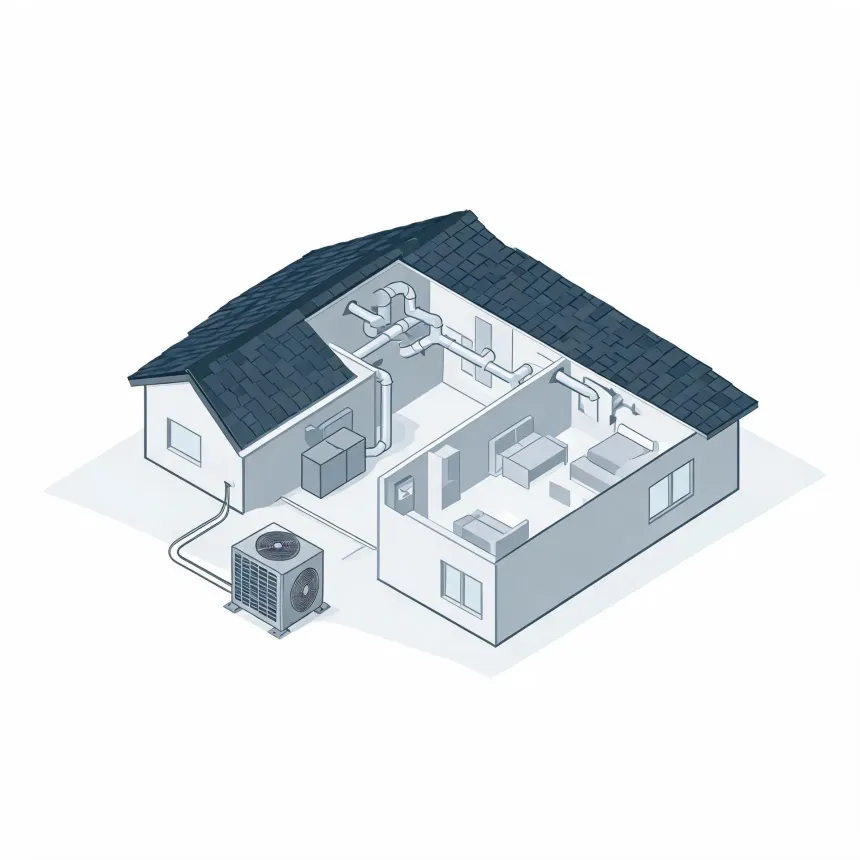
Isometric cutaway illustration of a single-story house showing interior rooms, ceiling ductwork, an indoor air handler, and an outdoor condenser unit connected by lines on the ground.
Your system heats September through May and cools July through August.

NOAA nClimDiv, 1991–2020 normals

A heat pump in Belknap County isn't fighting months of sustained cooling load the way units further south are.

Less strain year to year means a repair here is more often the right call than a sign the unit is worn out.

August and June are when a weak part finally gets found out

Cooling runs July through August
Heat runs September through May
38 damaging wind events from 2015 to 2024

Electricity in New Hampshire ran 23.40 cents per kilowatthour in 2024, well above what most states pay. A heat pump that's short cycling, icing up, or running its backup heat too often is burning through that expensive power the whole time it's off its game. You won't always see it as one big failure. It shows up as a power bill that creeps up a bit more each month something's wrong. Waiting it out costs you every one of those months, so it's worth getting looked at soon rather than letting it run rough through the winter.

Most heat pump problems in Laconia have a simple fix

Belknap County sees its share of wind and winter storms like anywhere in New Hampshire, but nothing here runs a heat pump harder than normal. A breakdown now is most likely a straightforward repair, not a sign your system is at the end of its line.

Find a contractor
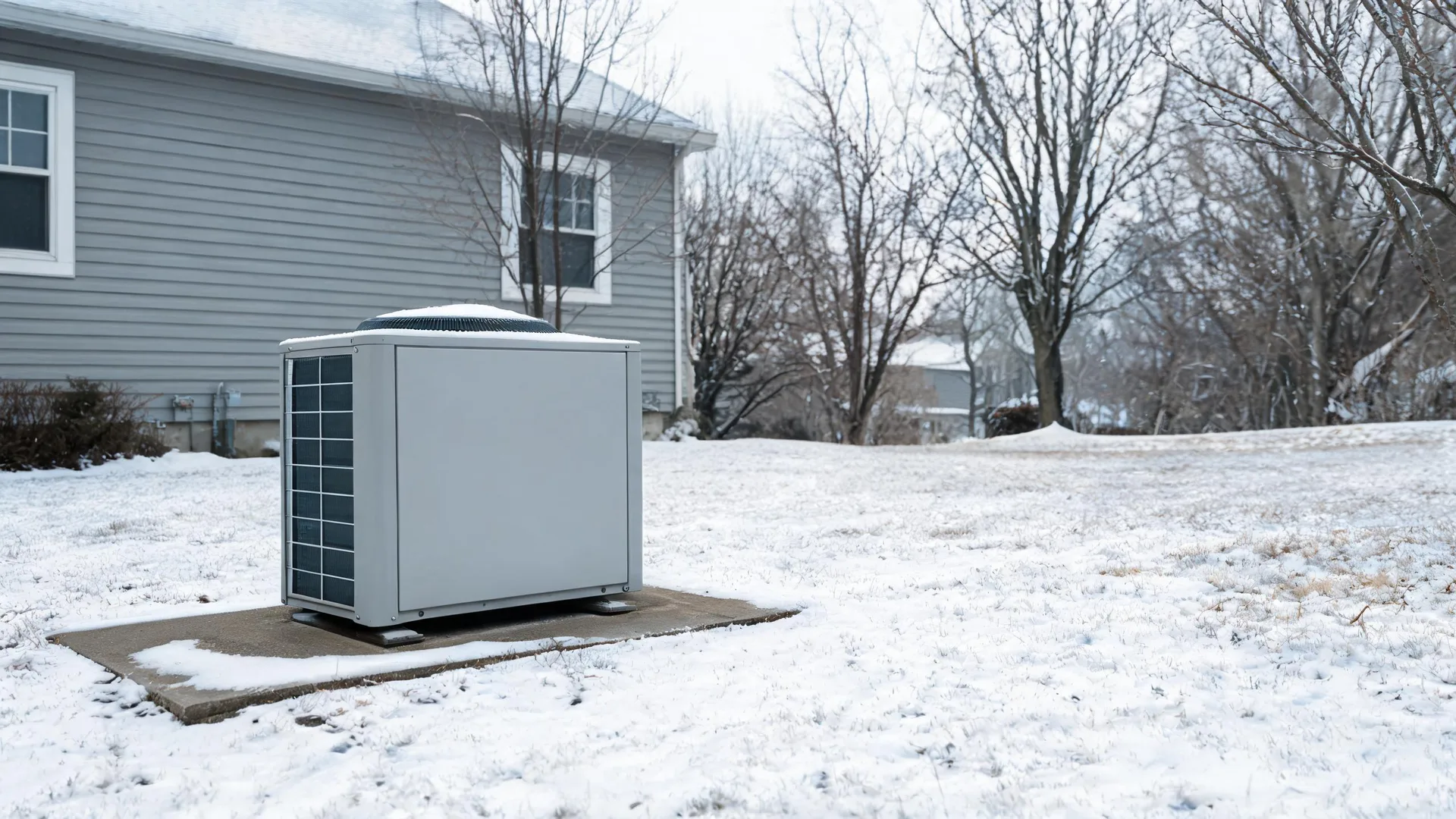
A white mini-split heat pump outdoor unit mounted on a concrete pad beside a gray-sided house, surrounded by gravel and green shrubs.

Fix it now, not after the next cold stretch

When something quits in the middle of a cold snap, the fix is usually the same whether it's your first winter with the system or your tenth. Call for repair before the overnight lows settle in at 14 degrees and whatever's wrong has more hours to get worse.

The reversing valve sticks or fails

The reversing valve is what switches a heat pump between heating and cooling, and it takes the brunt of the wear because it moves every time the system changes direction. A valve that sticks halfway can leave the system blowing cold air during a heating cycle, or stuck in one mode no matter what the thermostat asks for. It's one of the more involved repairs on a heat pump, but a failing valve doesn't mean the compressor or the rest of the system is in trouble.
Low refrigerant means a leak, not just a refill

A heat pump is a sealed system, so if it's low on refrigerant, that refrigerant went somewhere. Topping it off without finding the leak just buys a little time before the same symptoms come back. Weak heating, ice building up on the outdoor coil, or the system running long cycles without getting up to temperature are all signs worth having a tech trace to the actual leak point.

A heat pump that's struggling will keep trying to hit the thermostat's setting no matter what it's costing the system to get there. If ice is building on the outdoor coil, it blocks the airflow that coil needs to do its job, so the system pulls harder and builds more ice, and the cycle feeds itself. A reversing valve that's starting to stick gets worked every time the system shifts between heating and cooling, so leaving it alone just means more cycles wearing on the same bad seat. A refrigerant leak behaves the same way. The system keeps running low, the compressor works harder to move what's left, and a compressor straining under a low charge wears in a way it doesn't recover from. None of these fix themselves by waiting. The longer the system runs in that state, the more of its own parts it uses up getting you the same lukewarm air.

Age and symptoms tell you different things, and it's worth keeping them separate. A heat pump that trips a breaker or throws an error code isn't necessarily near the end. Plenty of those are a bad capacitor, a failed sensor, or a contactor that's pitted and sticking, and swapping the part solves it. What really calls for a hard look is the compressor. It's the one part that isn't practical to replace on its own, so a compressor that's failed or failing is usually what turns a repair conversation into a replacement one. Short of that, most of what goes wrong on a heat pump, a bad motor, a clogged drain, a stuck valve, is a repair on a system that still has plenty of working life in it. The question isn't how old the unit is, it's which part quit and whether that part can be swapped without replacing the whole machine around it.