






Two white colonial houses with lit windows and black shutters photographed at dusk along a tree-lined residential street.

Heat Pump Repair in Lebanon, NH

Tell us about the job

Takes about a minute. No obligation.

RepairHeat PumpGrafton County, NH
Step 1 of 2

What ZIP code is the job in?

A heat pump that's struggling usually tells you before it quits outright. Warm air that doesn't feel warm is one of the first signs, the system runs but the air coming out of the vents feels barely above room temperature. Short cycling is another, the unit kicks on, runs briefly, then shuts off again before the house has had a chance to catch up. Ice building up on the outdoor unit beyond what a normal defrost cycle clears is worth a call, especially if it's still there well after the cycle should have ended. Listen for the unit struggling to start, a hard clunk or a hum that doesn't turn into a running compressor. And if the system seems to run constantly without ever satisfying the thermostat, something is keeping it from doing its job, whether that's low refrigerant, a failing reversing valve, or a part further back in the system.

9 months
September through May, your system heats
10°F
the average winter night it heats against
76°F
the average summer afternoon it cools against
Isometric cutaway illustration of a house showing attic ductwork, an indoor air handler, furnished rooms, and an outdoor condenser unit connected by lines along the exterior wall.

Half the houses in Grafton County were built in 1981 or later.

A heat pump that came with a newer house still has working life in it, and that points toward repair.

Grafton County weather is normal for a heat pump. It still needs a working defrost cycle and backup heat.

133 damaging wind events from 2015 to 2024
30 hail events from 2015 to 2024
74 winter storms from 2015 to 2024

Heat here starts in September, right after August gives the system a break. That first cold stretch is when a weak part gets found out. A capacitor or contactor that was already marginal in August can fail outright once the unit has to run hard and often, day after day. Grafton County asks a heat pump to run nine months straight, September through May, so there's no long idle stretch to hide a problem in. If something's off at the start of the season, it's worth having looked at before the house needs it every day for months to come.

A struggling heat pump costs more to run here

Electricity in New Hampshire runs 23.40 cents per kilowatthour, well above what most states pay. A heat pump that's short cycling or running constantly to reach the thermostat is pulling power the whole time it struggles to do its job. That gets expensive to ignore.

Find a contractor
A man in a gray long-sleeve shirt and brown pants, seen from behind, carries a canvas tool bag up wooden steps toward a green front door.
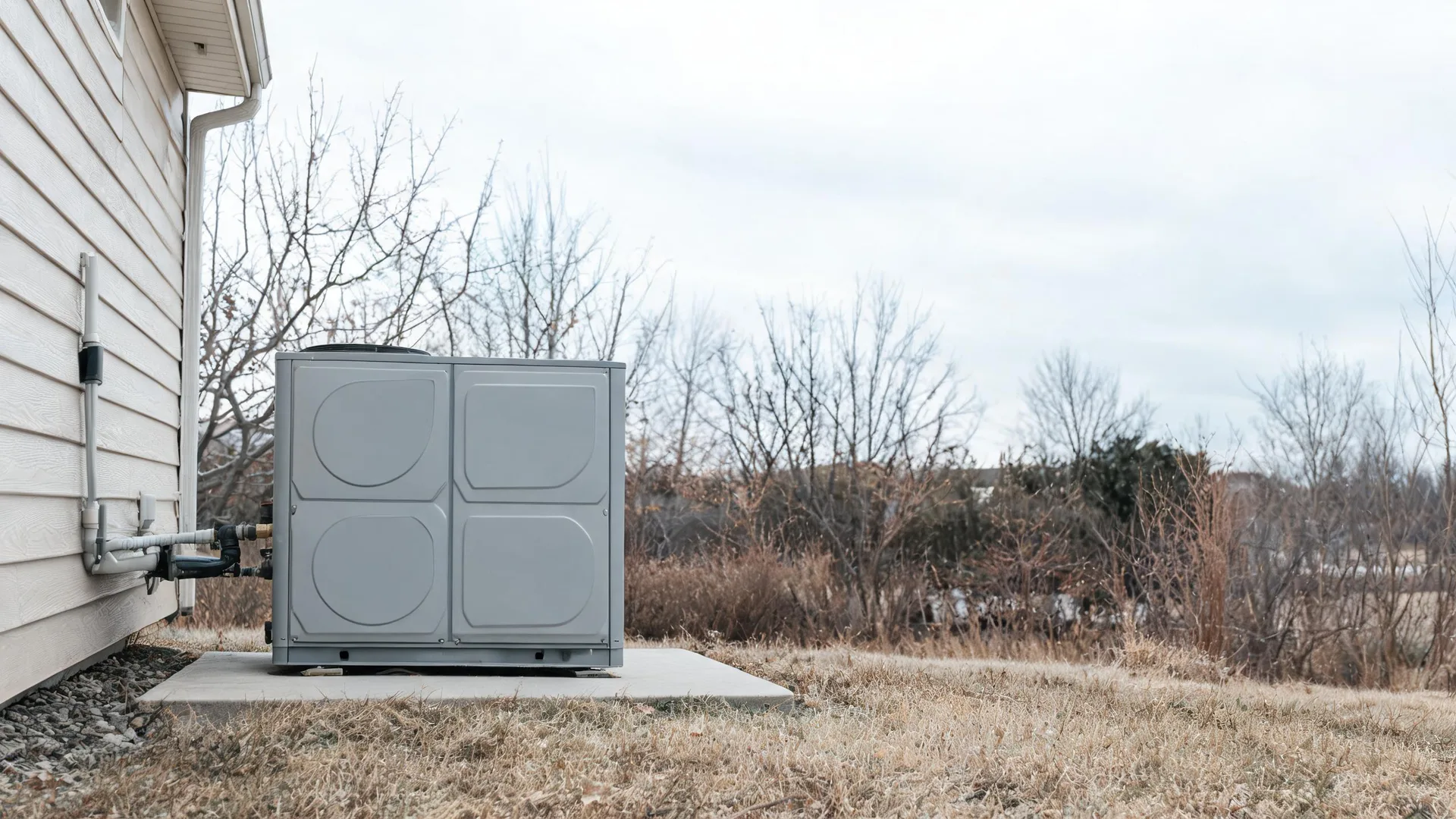
A residential heat pump outdoor unit mounted on a concrete pad next to a house with gray vinyl siding.

A newer system is worth fixing

If your heat pump came with the house and the house is newer, that's a reason to get it looked at rather than replaced. A capacitor, a contactor, a reversing valve, these are parts a tech fixes on a system that still has years ahead of it. Get the diagnosis before you assume the worst.

A refrigerant leak only gets worse

A heat pump low on refrigerant still runs. It just works harder to move the same heat, and the compressor takes the strain that the refrigerant should be carrying. Keep running it low and that strain is what takes the compressor out, which turns a leak repair into a full system replacement.
A failing part can take others with it

A weak capacitor makes the compressor pull harder to start. A stuck reversing valve makes the system fight itself between heating and defrost. Neither failure stays contained to the part that caused it, and the longer the unit runs in that state, the more of the system ends up worn down alongside it.

There are a few things worth checking before you pick up the phone. Look at the outdoor unit and clear away anything blocking it, leaves, snow, a stray branch, since airflow in and out of that unit matters as much as anything inside it. Check the thermostat is set to heat and the temperature is actually above room level, it sounds obvious but it rules out the simplest cause first. Go to the air handler or furnace closet and look at the filter, a filter clogged with dust chokes the airflow the whole system depends on and a heat pump will struggle long before anything else breaks. Check the breaker box for anything tripped, a heat pump that won't start at all sometimes just lost power to one side of the system. None of this fixes a bad capacitor or a refrigerant leak, but it clears the easy stuff out of the way, and if the system still isn't right after that, you know the problem is actually inside it.

A diagnostic visit starts outside at the unit itself, checking refrigerant pressures, electrical draw and how the compressor sounds under load. From there a tech checks the reversing valve, since that's what switches the system between heating and defrost and a stuck one causes a lot of the symptoms that get blamed on other parts. Inside, they'll check the air handler, the filter, and airflow across the coil, because a heat pump starved for airflow shows the same signs as one low on refrigerant. Electrical components get tested too, the capacitor, the contactor, the circuit board, since a part that's about to fail often tests weak before it quits outright. By the end, the tech should be able to point to the one part actually causing the problem rather than guessing at a list of possibilities.