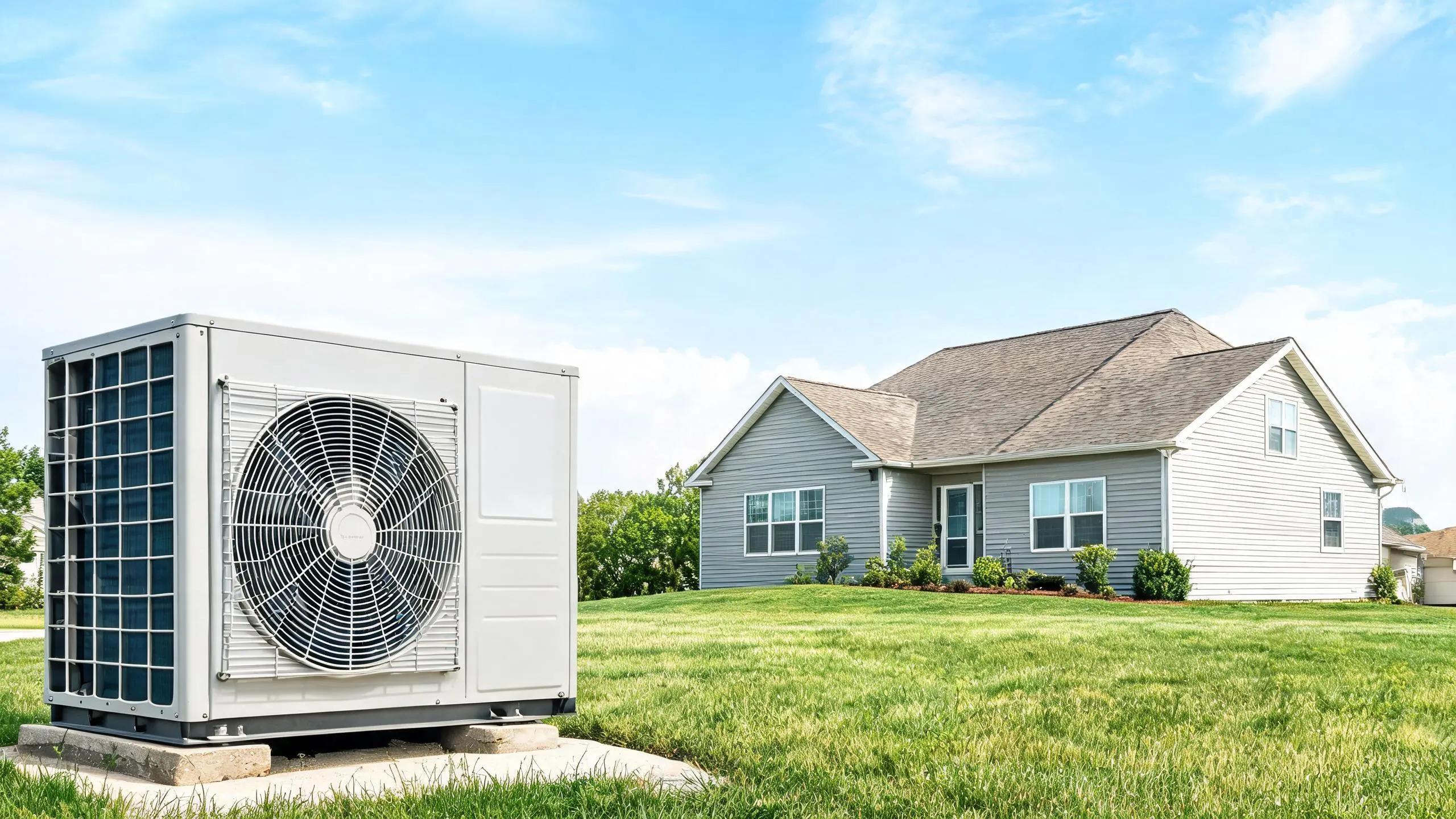
An outdoor HVAC condenser unit on a concrete pad in front of a single-story house with gray siding and a shingle roof.

Heat Pump Repair in Manchester, NH

Tell us about the job

Takes about a minute. No obligation.

RepairHeat PumpHillsborough County, NH
Step 1 of 2

What ZIP code is the job in?

The tech checks both the inside and outside unit

A heat pump problem can start at the outdoor unit, the indoor air handler, or the lines and wiring between them. The tech will check refrigerant pressures, look at the reversing valve that switches between heating and cooling, test the capacitor and contactor, and check airflow across both coils before deciding what's actually wrong.


What you noticed is a symptom, not the diagnosis

Weak heat, short cycling, or a system stuck in one mode can each come from more than one cause. A failed reversing valve is a different repair than a low refrigerant charge or a bad defrost sensor, and they can look the same from inside the house. The tech has to find which one it is before saying what the repair involves.

8 months
October through May, your system heats
2 months
July through August, it cools
16°F
the average winter night it heats against
79°F
the average summer afternoon it cools against
Isometric illustration of a cutaway single-family house showing interior ductwork and an air handler, with an outdoor condenser unit connected by lines along the exterior wall.
Your system heats October through May and cools July through August.

NOAA nClimDiv, 1991–2020 normals

Half the homes in Hillsborough County were built in 1978 or earlier, half after.

Your heat pump's age depends on when it was installed, not when the house went up, so check the unit itself rather than guessing from the home.

October is when a weak heat pump gets found

Cooling runs July through August
Heat runs October through May
147 damaging wind events from 2015 to 2024

Overnight lows here average 16 degrees across December, January and February, and that's the stretch where a struggling heat pump gets found out. Below freezing, the outdoor unit has to run longer to pull the same heat out of the air, so a problem that's minor in fall shows up as weak heat or short cycling once it's cold. Hillsborough County also sees its share of damaging wind and winter storms, which means power cuts happen here more than in a lot of places. Most heat pumps come back on by themselves once power is restored, but a system with a weak capacitor or a reversing valve that was already sticking can come back acting worse than before. None of this points to anything unusual about the equipment here. It's the usual problem, just harder to ignore in the cold.

A heat pump running badly costs more here every month it waits

New Hampshire homes paid 23.40 cents per kilowatthour in 2024, well above what most states pay. A heat pump that's short cycling or struggling to hold its temperature is using more power to do less, and that shows up on the bill before it shows up as a full breakdown. Getting a tech out now finds the cause while it's still one part, not several.

Find a contractor
A man in a cap, dark long-sleeve shirt and tan work pants walks up porch steps toward a green front door, carrying a worn canvas duffel bag, with a potted shrub and wall lantern beside the entry.
A gray air-source heat pump mounted on a concrete pad next to a house with gray vinyl siding, surrounded by gravel and flanked by green shrubs and white hydrangea flowers.

A small problem now is still a small problem

A heat pump that's struggling doesn't fail all at once. A reversing valve that sticks only partway will keep switching back and forth as the system tries to use it, and each cycle wears the solenoid a little more until it stops moving at all. A compressor running with a low refrigerant charge works harder to move the same heat, and that extra heat has nowhere to go but into the compressor itself. A capacitor that's weakening makes the compressor and fan motors draw harder on startup, and that strain shortens what's left of their life. None of these get better by running longer. The system doesn't rest and repair itself between cycles, it just keeps doing the same bad cycle more times. Left alone, a problem that starts in one part usually ends up taking a second part down with it.

Most failures start with wear, not a defect

The capacitor loses its charge slowly over years of startups. The contactor's points pit a little more every time they close. The reversing valve's solenoid wears from switching back and forth season after season. None of these fail the first time something goes wrong with them. They fail after enough cycles, which is why a heat pump often runs fine for years and then develops problems right around the same age.

Airflow problems cause damage that looks like something else

A dirty filter or a blocked outdoor coil starves the system of airflow, and the compressor ends up working against that restriction on every cycle. Run that way long enough and the compressor overheats or the coil ices over, and the symptom looks like a refrigerant leak or a failing compressor when the real cause was never enough air moving through in the first place.

Most people notice a heat pump problem through the vents, not at the outdoor unit. Air that should feel warm comes out barely lukewarm, or the system runs on and on without ever quite reaching the thermostat setting. Short cycling is another one. The unit kicks on, runs for a little while, and shuts off again before it's done anything useful. Ice on the outdoor coil in weather that doesn't call for it is worth a look too. Some frost is normal, but a coil caked in it usually isn't. If the system seems stuck heating when you want cooling, or the other way around, that's the reversing valve telling on itself. Any of these on its own is worth a call. Several at once usually means it's been going on for a while.

A heat pump nearing the end of its life rarely needs just one repair. If a tech is replacing the compressor or the reversing valve, that's a major part, and paying for it on an old unit often means the next failure isn't far behind. What matters more than age is what's already been replaced. A unit that's had a capacitor or contactor swapped in recent years still has life in it. One that's asking for a major part for the first time, late in its years of service, is a different conversation. The other thing worth weighing is how the system has run day to day. A heat pump that's kept up with the house without constant short cycling or weak heat has been running sound, and a repair brings it back to that. One that's needed a tech out for something new every season is telling you where it's headed. Either way, the repair itself should fix what's actually wrong, not just quiet the symptom for now.