






White colonial houses with lit windows photographed at dusk along a tree-lined residential street.

AC Installation in Dover, NH

Tell us about the job

Takes about a minute. No obligation.

New system or replacementCentral ACStrafford County, NH
Step 1 of 2

What ZIP code is the job in?

Oil heats more homes in Strafford County than any other fuel, at 42.5 percent. Gas and electric split most of what's left, with LP gas in a fair number of homes too. None of that runs the air conditioner, but it tells you most houses here added central air onto a system built around a boiler or an oil furnace rather than a gas furnace with a matched coil already in place. An AC installation in Dover often means fitting a condenser and air handler to a home that was never built with central air in mind. That changes where the line set runs and what the ductwork needs to look like, and it's worth having someone check what your house already has before deciding what to put in.

2 months
July through August, your air conditioner is on duty
79°F
the average summer afternoon it cools against
9 hail events
in ten years, and hail bends the fins on outdoor coils
13.4 SEER2
the federal minimum any new unit must meet
Isometric 3D cutaway render of a house with dark siding showing interior rooms, ductwork and an air handler, connected by lines to an outdoor condenser unit on a white background.
Your air conditioner works hardest from July through August.

NOAA nClimDiv, 1991–2020 normals

Cooling in Dover runs July through August.

June is the month to get a new system in, before the first hot week puts it to work.

Two months of work a year, so the system doesn't need to be a hero

Cooling runs July through August
Summer afternoons average 79°F
43 damaging wind events from 2015 to 2024

A standard-size, standard-efficiency system is the right call here. Dover doesn't push cooling equipment the way a hotter climate does, so there's no case for oversizing a condenser or paying up for a higher SEER2 rating than you need. Electricity in New Hampshire ran 23.40 cents per kilowatthour in 2024, which is worth knowing when you're sizing a system, since a unit that's too big for the house cycles on and off more and costs more to run than one that's sized to the load. Get the sizing right for your square footage and your ductwork, and the standard unit does the job for the two months it's working.

Dover's minimum is 13.4 SEER2, and there's a credit for going above it

Any system going in now has to meet 13.4 SEER2, the federal minimum for split systems this size manufactured on or after January 1, 2023. Strafford County is zone 5A, a cold climate where the furnace or boiler carries the real load and the AC just has to clear that floor. A federal tax credit is available for qualifying high-efficiency equipment, worth asking about when you're comparing units.

Find a contractor
A man in a dark cap, dark rolled-sleeve shirt and tan trousers walks up porch steps toward a pale green panelled door, carrying a worn canvas tool bag in his left hand, with a potted shrub beside the entry.
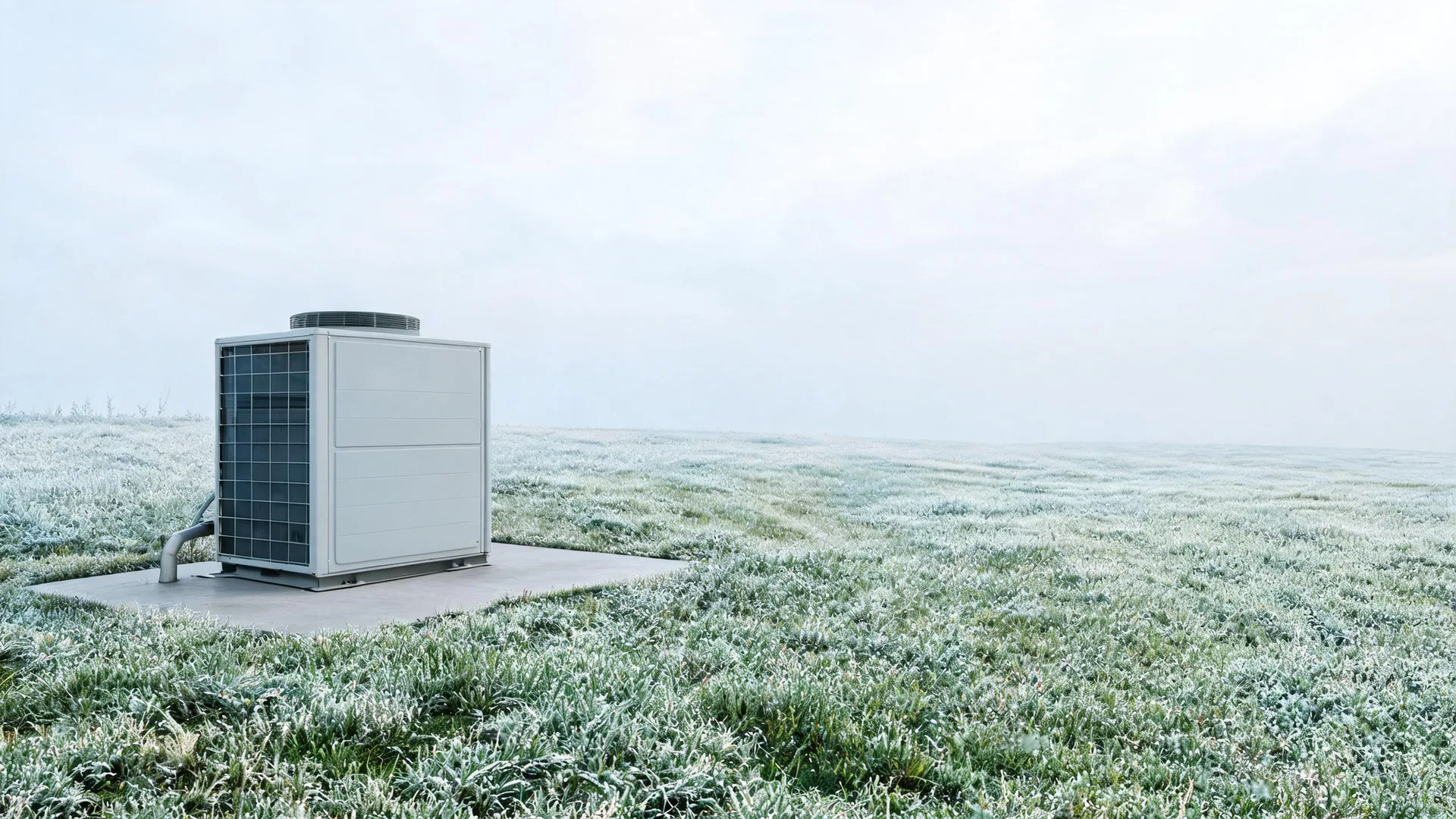
A gray metal air conditioning condenser unit mounted on a concrete pad in a flat grassy field under a partly cloudy sky.

The number on the label is a ratio, not a promise

That SEER2 number on the label is a ratio, not a guarantee. It compares the cooling the system puts out against the electricity it draws over a season, under test conditions set by the people who write the standard. A higher number means the compressor and coil move heat more efficiently per watt, not that the unit is bigger or stronger. Systems carrying the same rating can still behave differently once installed, because ductwork, airflow, and how well the coil matches the condenser all affect what you actually get out of it. The rating is a starting point for comparing equipment, not a promise about what shows up on the bill.

The ductwork decides more than the equipment does

A condenser and coil can be sized right on paper and still underperform if the supply and return ducts can't move enough air across them. Installing new ductwork or reworking what's there to handle the added airflow is often a bigger part of the job than setting the outdoor unit. Where the ducts run short or narrow, that work adds time and labor beyond the equipment itself.

The line set and the electrical feed have to reach

The refrigerant line running between the condenser and the air handler has to be cut and routed for the specific distance and path between them, not just coiled up and connected. The condenser also needs its own electrical circuit, and if the panel doesn't already have the capacity or a spare breaker slot, that's separate work before the unit can be installed at all.

Aerial view of a gray outdoor air conditioning condenser unit mounted on a concrete pad next to a house with vinyl siding.

Going above the federal minimum saves little here, about $20 a year.

  • A higher-efficiency unit$210 a year
  • A new unit at the federal minimum, 13.4 SEER2$230 a year

Estimates for a typical Strafford County home, from EIA household energy data, New Hampshire fuel prices and NOAA climate normals. Your home will differ.

Most installs run a full day, sometimes into a second. The crew sets the condenser on a pad outside first, level ground matters so the compressor doesn't strain. Inside, the air handler or coil goes in next, tied into the existing ductwork or the new runs if that work came first. Then the line set gets connected, the system gets evacuated to pull out moisture and air, and it's charged with refrigerant to the weight the manufacturer specifies for that line length. Before anyone leaves, it runs through a full cycle so the tech can check the temperature split across the coil and listen for anything that shouldn't be there. A thermostat that's new or moved gets wired and tested at the same time, since that's the one part you'll touch every day.