Is a dual fuel heat pump worth it in New Hampshire

Answer a few questions instead of calling shop after shop.

Skip the calls

For most homes in New Hampshire, yes, if the backup is oil. A heat pump loses capacity as it gets cold, and below somewhere around 20 to 30 degrees it struggles to keep up on its own. A dual fuel setup lets the heat pump carry the house through fall and spring, when temperatures sit in the range it handles well, then switches over to the oil furnace once it turns too cold for the heat pump to work efficiently. Since most homes here already heat with oil, that furnace is often already sitting there, so the switch-over is really about adding a heat pump and the controls to hand off between the two. You get the heat pump's lower running cost for a good stretch of the year, and the furnace's output on the coldest nights, without asking the heat pump to do a job it isn't built for in a New Hampshire January.

  1. The heat pump runs the house in fall and spring.

  2. A thermostat or controller tracks outdoor temperature as it drops.

  3. Below the set switchover point, the system calls for the oil furnace.

  4. The oil furnace takes over and carries the house through the cold.

A closed laptop and a cream mug of coffee on a coaster sit on a dark wooden table, with a potted plant at left and a kitchen counter, tiled backsplash and shelf of ceramics in the background.

What this looks like at your thermostat

You'd notice less than you'd think. The thermostat still shows one number, and the house still holds it. What changes is underneath. On a mild January day the heat pump does the work and the oil burner stays off. On the coldest nights, the furnace picks up the load and you'd hear it kick in the way it always has. Your oil tank gets used less over a winter, not eliminated. That's the tradeoff: lower draw on the furnace most days, with oil still there for the stretch of cold a heat pump alone can't handle in New Hampshire.

Getting to that point usually means calling around to a handful of contractors, explaining your oil setup and your heat pump to each one, and comparing quotes that size up the job differently. A dual fuel switchover has to be set correctly for your equipment and your house, and that's easier to get right with one local contractor who installs these year-round and already knows where oil furnaces and heat pumps tend to need adjusting when paired together, rather than piecing together opinions from several.

A gray upholstered sofa with a textured cushion sits beside a dark round side table holding a vase of green foliage, with a table lamp and sheer-curtained window behind.
A gray outdoor condenser unit on a raised pad beside a house with horizontal lap siding, with refrigerant lines, conduit and an electrical disconnect box on the wall, and shrubs on a mulch bed to the left.

Running above the switchover point

On a mild day the heat pump sits on its pad and does the work on its own, drawing outside air and moving it inside without any help from the oil furnace. You'd see a clean unit, steady airflow, and a burner that never has to fire.

A weathered gray outdoor condenser unit on a concrete pad beside a house with horizontal vinyl siding, with conduit, refrigerant lines, and an electrical disconnect box on the wall behind it.

Left to run below it

Without dual fuel, a heat pump pushed hard through the coldest weeks runs constantly trying to keep up, and the strain shows: grime on the grille, leaves packed against the base, a unit working harder than it should for less heat delivered.

A woman in a knitted shawl sits in a living room with a fireplace, shelves, a sofa with cushions, and a lamp by a bright window, looking off to the side.
A woman with long brown wavy hair in a green shirt over a white top stands in a living room with built-in white shelves, a ceiling fan, a potted plant and a sliding glass door.
A woman with shoulder-length gray-streaked hair in a light gray knit sweater stands smiling and looking off to the side in a living room with a sofa, houseplant, framed picture, and sunlit sliding glass door.
A woman with shoulder-length curly gray hair wearing a gray knit sweater stands near a window with a sheer curtain, looking to the side, with a blurred interior room behind her.

Dual Fuel or Heat Pump Only

Dual fuel

  • The heat pump handles fall and spring on its own, when outdoor air is mild enough for it to work efficiently.
  • Below the switchover point the oil furnace takes over, so you're never asking the heat pump to do a job it can't do well.
  • Oil in New Hampshire isn't cheap either, but it beats running electric resistance strip heat during the coldest stretches.
  • You still need an oil tank, a working burner, and deliveries through the winter, same as you do now.
  • Two systems means two things that can need service, though each one only works the months it's suited for.
  • If your house already heats with oil, this setup keeps that furnace instead of replacing it outright.

Heat pump only

  • One system, one fuel, nothing to switch between and nothing to coordinate at the thermostat.
  • On the coldest New Hampshire nights the heat pump has to keep working past the point where it's efficient, or lean on backup electric strips.
  • With power costs as high as they are here, a cold snap that pushes the heat pump hard can show up on the electric bill.
  • No oil tank, no burner, no deliveries to schedule once the furnace is gone.
  • Sizing has to account for the worst winter night, not the mild days, which usually means a bigger, more expensive unit.
A gray outdoor heat pump unit with a large fan grille sits on a concrete pad beside a house with horizontal lap siding, next to a green shrub, mulch bed, and lawn.

The heat pump carrying the load it's built for

This is the picture on a mild day. The coil is clean, the fins are clear, and the unit pulls outside air without strain. Above the switchover point this is all the house needs, and the oil furnace stays off.

An outdoor air conditioning condenser unit with a top fan grille sits on a concrete pad beside a house with horizontal siding and a concrete step.

A coil that can't do its job

Dust and debris packed into the fins block the airflow the unit depends on. A heat pump working this hard to move air uses more power to do less, and in a New Hampshire winter that's exactly when you need it running clean.

Power costs 24.53 cents per kilowatt-hour statewide

At 24.53 cents a kilowatt-hour, every degree you ask the heat pump to cover below that switchover point costs you more than it would in most other states. That's the case for letting the oil furnace take the coldest days instead of pushing the heat pump through them.

EIA-861 2025 statewide residential average

A gray outdoor condenser unit on a concrete pad beside a white horizontal-siding house, with refrigerant lines and conduit running to a wall-mounted disconnect box, bare soil in front and a green shrub at left.
Above the switchover point, this is the whole job: a clean unit on its pad, moving heat with no strain and no oil burned.
An outdoor air conditioner condenser unit on a concrete pad beside a house with horizontal lap siding, with a shrub to the left, bare dirt in front, and conduit and a metal disconnect box on the wall.
Push a heat pump past what the cold allows and it runs long, iced coils and all, to make up what it can't deliver.
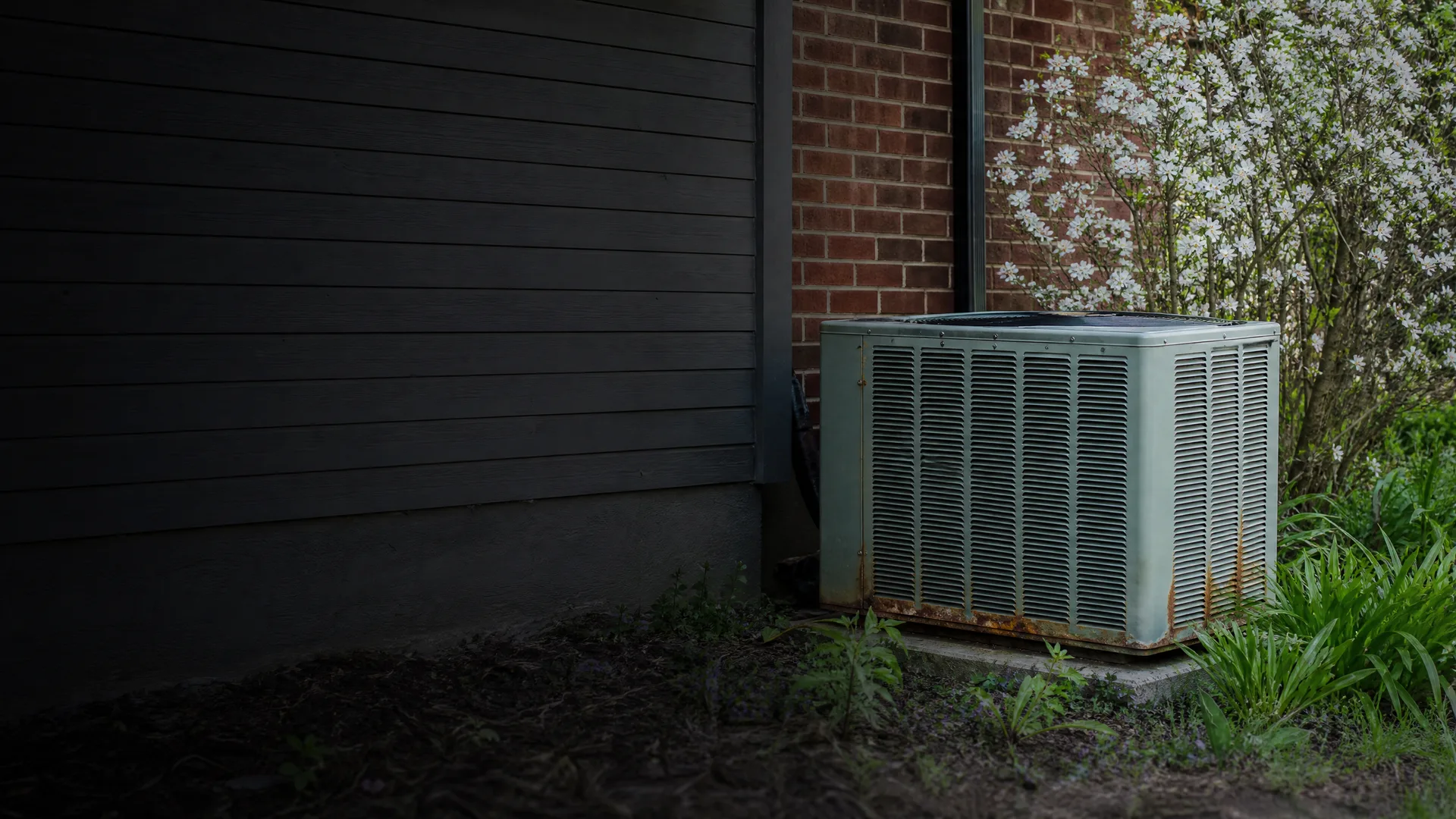
An outdoor air conditioning condenser unit on a concrete pad beside a dark horizontal-siding wall and a brick wall, with flowering shrubs and grass nearby.

Rust has worked its way along the base of the unit, the kind that shows up after enough winters of snowmelt sitting against the metal. It's a mild spring afternoon, the side yard still patchy with old leaves, and the unit is running quiet, doing the easy part of its job now that the air outside doesn't ask much of it. You notice the rust when you walk past with the hose, crouching down to look at the base plate and the lines running up from it. Nothing about today's weather is giving it trouble. What you're looking at is what a lot of winters leave behind, and whether it still has enough left in it to carry you through another one before the oil furnace has to do all the work alone.


Skip calling around

Your request goes to one pro, not a list of companies.

It costs nothing to send, and you don't have to hire anyone.

Why the switchover point matters

The number where the system hands off from heat pump to oil isn't arbitrary. It's set based on how that specific heat pump performs as the air gets colder, since every model loses capacity at a different rate. Set it too low and the heat pump keeps running on days it can't really keep up, drawing on backup heat strips or just falling behind. Set it too high and the oil furnace is firing on days the heat pump could have handled on its own, burning oil you didn't need to burn. A contractor who installs these in New Hampshire sets that point from the equipment's own data, not a guess, and checks it against how your house actually holds heat.

What oil still buys you here

Oil has one advantage a heat pump doesn't: it makes its full heat output no matter how cold it gets outside. A heat pump's output drops as the temperature drops, which is exactly why the backup exists. On the coldest nights, the oil furnace is doing a job the heat pump was never going to do well, and it does it at full strength every time, not a reduced one. That's worth something on a night when the temperature keeps dropping after dark and the house still needs to hold its number. The tradeoff is cost per unit of heat, which is why the switchover point is set to use oil only when the cold actually calls for it.

An outdoor air conditioning condenser unit on a concrete pad beside a house with horizontal siding above a brick foundation, with a flexible conduit running to a wall-mounted disconnect box.
Before you get your heat pump installation
A gray outdoor condenser unit on a concrete pad beside a beige vinyl-sided house, with a wall-mounted disconnect box, flexible conduit, mulch bed, shrubs and a concrete walkway in front.
After you get your heat pump installation

Getting a dual fuel setup sized right on your own

You'd be calling around for contractors who work on both heat pumps and oil furnaces, explaining your house to each one, then comparing quotes and switchover numbers yourself.

Describe it once

One contractor who sets up both sides

A local contractor who services heat pumps and oil furnaces all year sets the switchover point for your equipment and your house, so you're not piecing that together from separate quotes.

Describe it once

Why does the oil furnace still run on cold nights

If your system isn't set up right, you'll notice the oil burner kicking on even when it isn't that cold out, or the heat pump straining to keep the house warm on a night in the teens while the burner stays quiet. You might hear the outdoor unit running long and steady without the house actually warming up, or notice ice building on the coil that doesn't clear on its own. Some homeowners catch the oil tank draining faster than expected, or the opposite, a heating bill that's all electric through a stretch of real cold. Left alone, a switchover point that's wrong in either direction means you're paying for capacity you're not getting, and on the coldest nights that's the difference between a warm house and one that can't keep up.

Single-story house with tan horizontal siding and a dark shingled hip roof, fronted by a patchy green and brown lawn and a concrete walkway leading to the covered entry.

Summer here runs milder than most of the country, but the air still sits at a dew point averaging 59°F across June, July and August, according to NOAA climate normals. That's the number that decides whether your heat pump has to work on moisture, not just temperature. At 59°F you'll still feel it on the muggiest afternoons, the house a little damp even with the thermostat satisfied, because the coil is pulling water out of the air on top of cooling it. Your dual fuel setup doesn't change that side of the job. The oil furnace only matters once it's cold. All summer, the heat pump is on its own handling both jobs at once.

NASA POWER T2MDEW county cells weighted by homes

A woman and a sleeping child wrapped together in a cream knitted blanket on a couch, with a potted plant, framed photo and lit lamp in the background.
An older woman with gray hair in a bun and glasses, wearing a beige knit sweater, smiles while looking to the side in a warmly lit kitchen, with a loaf of bread on the counter in the foreground and a snowy scene outside the window.

Where this leaves you

  • A dual fuel setup makes sense in New Hampshire because it hands the coldest days to oil instead of pushing the heat pump past what it can deliver.
  • The switchover point is what makes the pairing work, and getting it set right is what keeps the oil burner from running on nights that aren't that cold.
  • A contractor who works on both heat pumps and oil furnaces all winter knows where that switchover point belongs for your specific equipment.
  • One contractor handling the sizing and setup means you explain your house once instead of repeating it to several companies before you can compare quotes.
  • The heat pump still carries fall and spring on its own, and that part of the answer doesn't change no matter who sets up the system.
  • Local matters here because the switchover point depends on how cold it actually gets where you live, not a number pulled from a different climate.

A dual fuel setup is worth it for most homes here, as long as the oil furnace is the one taking the coldest nights and the switchover point is set for your equipment, not a guess. That number is the whole job. Set it too high and the oil burner runs more than it needs to. Set it too low and the heat pump struggles on a night in the teens while you wonder why the house feels off. Getting it right isn't something you work out from a manual. It takes someone who's been inside enough systems like yours to know how that particular heat pump loses capacity as the air drops, and where the furnace needs to pick it up instead.

That's the kind of contractor this connects you to. Someone local, who works on both sides of this pairing all winter, in the same cold you're dealing with. You explain your house once. No sorting through a handful of companies, no repeating yourself over the phone four different times, no lining up quotes that each assume a different switchover point. One contractor looks at your heat pump, your furnace, and your house, and sets the number where it belongs for that equipment in that house.

The heat pump still does what it's always done, carrying the house through the mild months without any help. What changes with a good setup is everything below that line. The furnace steps in when it should, and only when it should.

A gray outdoor condenser unit on a concrete pad beside a house with horizontal lap siding, bordered by mulch, shrubs and a mowed lawn.

No phone calls to make

New system or replacementHeat PumpNew Hampshire
Step 1 of 2

What ZIP code is the job in?