White colonial houses with lit windows and dark shutters line a tree-lined street at dusk, bordered by dry-stacked stone walls.

AC Installation in Laconia, NH

Tell us about the job

Takes about a minute. No obligation.

New system or replacementCentral ACBelknap County, NH
Step 1 of 2

What ZIP code is the job in?

Oil heats most homes here

Fuel oil or kerosene heats 49.6% of homes in Belknap County, more than any other fuel. LP gas is next at 22.2%. Utility gas and electric heat are both under 9%. For an AC installation, the heating fuel is a clue to what's already in the house, since oil systems here often run on boilers rather than furnaces.


Central air often means new ductwork

A boiler heats water for radiators or baseboard. It doesn't move air, so there's no ductwork already in place to tie a new AC system into. If that's what's heating your home, installing central air means running ducts for the first time, not just adding an outdoor unit to a system that's already set up for it.

2 months
July through August, your air conditioner is on duty
79°F
the average summer afternoon it cools against
11 hail events
in ten years, and hail bends the fins on outdoor coils
13.4 SEER2
the federal minimum any new unit must meet
Isometric cutaway illustration of a house showing interior ductwork, an air handler, and an outdoor condenser unit connected by lines, with simple furniture in the rooms.
Your air conditioner works hardest from July through August.

NOAA nClimDiv, 1991–2020 normals

New Hampshire homes paid 23.40 cents per kilowatthour in 2024, above the national average.

A right-sized system costs less to run here than an oversized one, so there's no reason to size up.

June is the month to get it in before the heat starts

Cooling runs July through August
Summer afternoons average 79°F
38 damaging wind events from 2015 to 2024

Belknap County gets its share of rough weather. Winter storms and damaging wind together account for most of the 96 severe weather events recorded here between 2015 and 2024, so the power going out for a stretch isn't rare. None of that changes what size AC your home needs or how efficient it has to be. A standard system sized to your house will handle a hot week the same as a mild one. Weather like this is a reason to think about how you'd get by without power for a day, not a reason to buy a bigger or pricier unit than your home calls for.

Any new system here has to meet 13.4 SEER2

Belknap County falls in climate zone 6A, and any split-system air conditioner under 45,000 Btu/h installed here has to meet a federal minimum of 13.4 SEER2. That sets the floor for what a contractor can install, and it's worth knowing before you start comparing units.

Find a contractor
A man in a cap, dark long-sleeved shirt and brown work pants carries a canvas tool bag as he climbs porch steps toward a green front door.
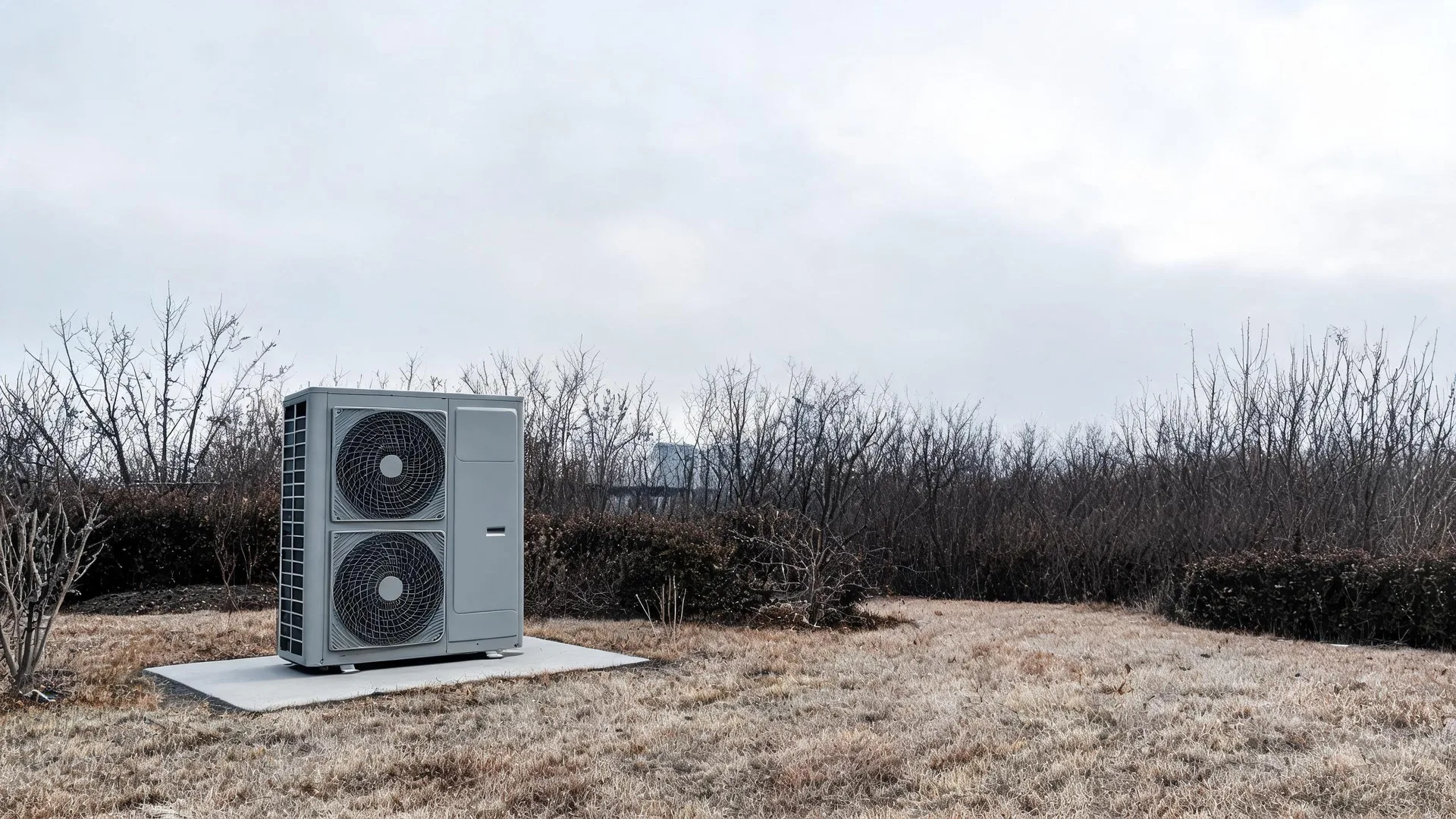
A gray residential air conditioning condenser unit mounted on a concrete pad outdoors, surrounded by green grass under a partly cloudy blue sky.

Two months of work a year

Cooling here runs about two months, July and August, with afternoon highs averaging 79°F. That's a short season and a mild one. A system that only has to work that hard for that long isn't fighting the same wear as one running most of the year. When something does go wrong with a system here, age or a skipped filter change is usually behind it, not the unit being run into the ground. That's worth knowing when you're picking a system. You don't need to pay for the highest efficiency tier to get a unit that holds up here.

The old condenser gets hauled away

A contractor doing the install disconnects the old outdoor unit, recovers any refrigerant left in the line, and takes the unit with them. Refrigerant can't legally be vented into the air, so it has to be removed and handled separately before the unit is scrapped. You shouldn't be left to deal with the old equipment yourself.

The indoor coil and line set usually go too

If the new system uses a different refrigerant or different line sizing, the old coil and the copper lines running to it get replaced along with the condenser. Reusing an old coil or line set with new equipment can cause leaks or pressure problems, so most installs swap the whole set rather than mixing old and new parts.

Overhead view of an outdoor AC condenser unit on a concrete pad next to a house with a dark shingle roof.

Going above the federal minimum saves little here, about $20 a year.

  • A higher-efficiency unit$180 a year
  • A new unit at the federal minimum, 13.4 SEER2$200 a year

Estimates for a typical Belknap County home, from EIA household energy data, New Hampshire fuel prices and NOAA climate normals. Your home will differ.

Install day starts with the old equipment coming out. The outdoor unit gets disconnected, any refrigerant left in the lines gets recovered, and the indoor coil comes out if it's being replaced too. If ductwork is already in place, the crew sets the new coil, runs line set to the outdoor pad, and pressure tests the lines before any refrigerant goes in. If there's no ductwork yet, most of the day goes into running and sealing it, and that takes a lot longer than swapping equipment onto a path that's already there. Once the lines are connected and tight, the system gets charged and checked against airflow and pressure specs before anyone calls it finished. A good install ends with a thermostat that's been set up and explained, not just a unit running outside.