





White colonial-style houses with lit windows photographed at dusk along a tree-lined street.

AC Installation in Lebanon, NH

Tell us about the job

Takes about a minute. No obligation.

New system or replacementCentral ACGrafton County, NH
Step 1 of 2

What ZIP code is the job in?

Ask how they arrived at the size unit they are recommending. A contractor should walk through the house and check the windows, the insulation and the layout rather than pricing off square footage alone. Ask what happens to the ductwork already in place, since a new system moves air differently than the one it is replacing, and leaks or narrow runs that the old unit tolerated can cause problems with the new one. Ask whether the warranty on the compressor comes from the manufacturer or the installer, and what it takes to keep that warranty valid. And ask what the quote actually includes. A price that leaves out the disconnect, the pad or the electrical work is not the real price of the job.

76°F
the average summer afternoon it cools against
30 hail events
in ten years, and hail bends the fins on outdoor coils
13.4 SEER2
the federal minimum any new unit must meet
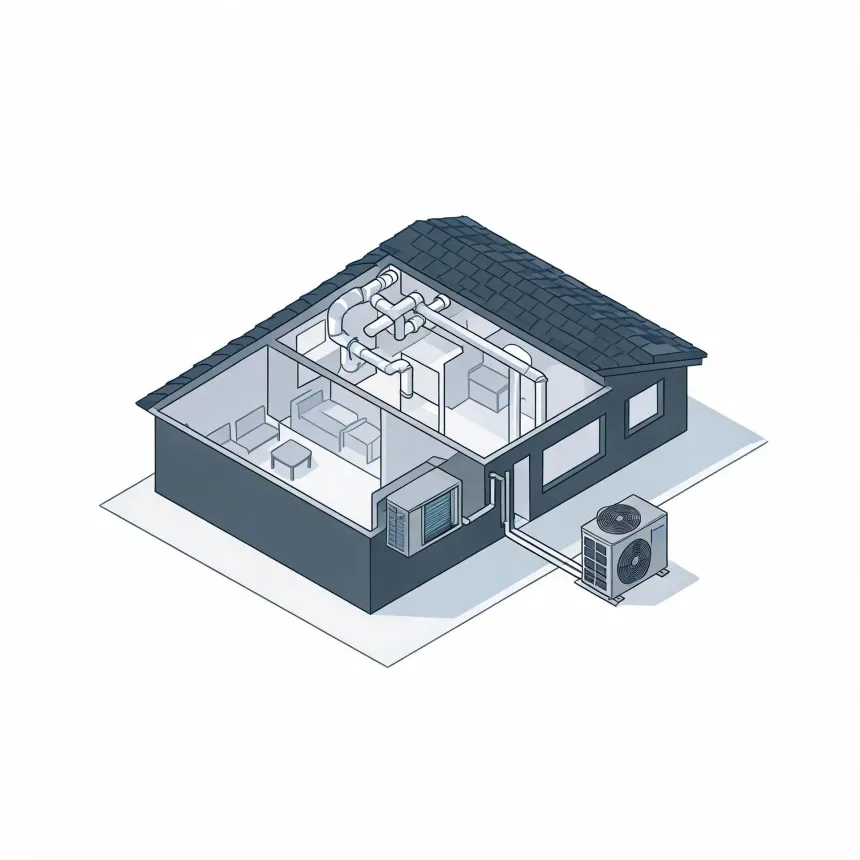
Isometric line illustration of a cutaway single-story house showing interior rooms with furniture, ceiling ductwork, an indoor air handler, and an outdoor condenser unit connected by lines along the exterior wall.
Your air conditioner works hardest from July through August.

NOAA nClimDiv, 1991–2020 normals

Fuel oil and kerosene heat 43.2% of homes in Grafton County, more than any other fuel.

Central air here almost always means adding a cooling system to a house built around a furnace or boiler, not replacing one all-in-one unit with another.

A standard system handles Lebanon cooling fine

Power costs 23.4 cents a kWh statewide
Summer afternoons average 76°F
133 damaging wind events from 2015 to 2024
Summer here doesn't ask much of an ACJune through August, the afternoon high averages 76°F.

Grafton County falls under zone 6A, which is built around winter, but the cooling rules still apply to whatever goes in here. Any split-system central air unit under 45,000 Btu/h made since January 2023 has to meet 13.4 SEER2 at minimum, no matter where it's installed. That floor is federal, not something a contractor can work around with a cheaper unit. It narrows what you'll be quoted, since anything older or below that rating shouldn't be on the table. A unit that clears 13.4 SEER2 is the baseline here, not an upgrade.

Plan for storms

Storms and outages are common here. Plan where the outdoor unit goes, how it's protected, and how you'll keep heat and hot water in an outage.

Find a contractor
A gray residential air conditioner condenser unit mounted on a concrete pad in an open grass field.

The install costs more than the unit

Installing a new system costs more than swapping in a like-for-like unit, and most of that comes down to what has to change around the equipment, not the equipment itself. If this house never had central air, a contractor has to figure out where the ductwork runs, where the indoor coil ties into the furnace, and where the outdoor unit can sit with enough clearance to breathe. Adding a line set through walls or framing takes time that a straight replacement never needs. Electrical matters too. A condenser needs its own dedicated circuit and disconnect, and if the panel doesn't have room or the wire gauge is wrong for the new unit's draw, that's added work before the system ever runs. The size of the unit matters as much as any of this. A contractor sizing off a load calculation, not just square footage, may land on a different tonnage than you expected, and the price moves with it. None of this is optional work tacked on to pad a bid. It's what makes the system work the way it's supposed to once it's running.

The old equipment gets hauled away

A condenser holds refrigerant that cannot just be vented or dumped. A licensed contractor has to recover it with a machine built for that before the unit gets disconnected and taken off the pad. The coil inside comes out too if it's being replaced along with the outdoor unit. None of this is something to haul to the curb on your own.

What's left behind depends on what's changing

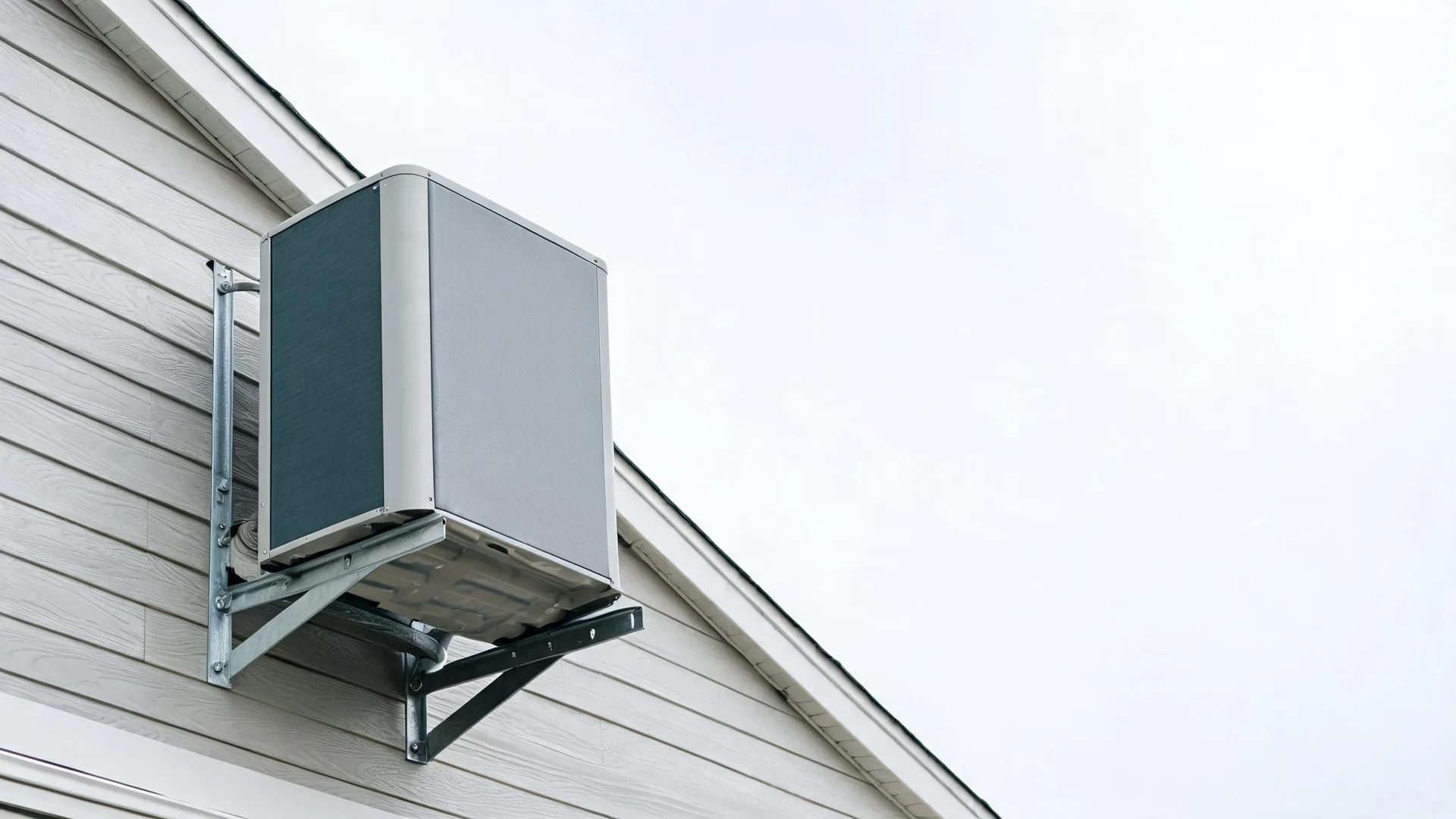
If the old line set and pad are being reused, there may be nothing left to deal with once the new unit is set. If the line set is being replaced, the old copper comes out of the walls or framing wherever it runs. A pad that's cracked or sitting unevenly usually gets swapped rather than reused, since the new unit needs to sit level and clear of the ground.

Overhead view of an air conditioning condenser unit on a concrete pad next to a house with asphalt shingle roofing and vinyl siding.

Going above the federal minimum saves little here, about $10 a year.

  • A higher-efficiency unit$90 a year
  • A new unit at the federal minimum, 13.4 SEER2$100 a year

Estimates for a typical Grafton County home, from EIA household energy data, New Hampshire fuel prices and NOAA climate normals. Your home will differ.

Install day starts with the old system off and its refrigerant recovered before anything gets disconnected. The outdoor unit comes off its pad and the old line set gets dealt with, then the new condenser goes down and the line set runs to the indoor coil. A contractor pulls a vacuum on the line set and watches it hold before charging it with refrigerant, since charging a line that still has a leak means doing the whole thing over. The electrical work happens alongside this, a dedicated circuit and disconnect run to the condenser. Once it's all connected, the system gets run through a full cycle, checking the temperature split at the vents, the airflow, and that the thermostat is actually controlling the equipment. A contractor should walk through what got done and what the thermostat settings mean before heading out, not just leave a manual on the counter.