Aerial view of a square outdoor air conditioning condenser unit on a concrete pad beside a house wall with a sliding glass door.

AC Installation in Portsmouth, NH

Tell us about the job

Takes about a minute. No obligation.

New system or replacementCentral ACRockingham County, NH
Step 1 of 2

What ZIP code is the job in?

Bigger isn't better

An oversized air conditioner cools the air fast and shuts off before it pulls the moisture out of the room. The house ends up cold and clammy at the same time, and the compressor is cycling on and off far more than it should, which wears it out sooner.


The load calculation is the job

A contractor sizes the system by working out how much heat the house actually gains, room by room, from the windows, the walls, the insulation, and which way the house faces. That number, not the size of the old unit, is what decides the tonnage going in.

2 months
July through August, your air conditioner is on duty
80°F
the average summer afternoon it cools against
29 hail events
in ten years, and hail bends the fins on outdoor coils
13.4 SEER2
the federal minimum any new unit must meet
Isometric grayscale illustration of a cutaway house interior showing a furnace with ductwork, interior rooms with furniture, and an outdoor condenser unit connected by lines at the exterior wall.
Your air conditioner works hardest from July through August.

NOAA nClimDiv, 1991–2020 normals

Electricity in New Hampshire runs 23.40 cents per kilowatt-hour, among the higher rates in the country.

A properly sized, standard-efficiency system is what keeps that rate from turning into a bigger bill than it needs to be.

Most homes near Portsmouth heat with oil, and a new AC pairs with whatever system is already there

42.2% of homes heat with fuel oil
Cooling runs July through August
Summer afternoons average 80°F

Cooling here only runs from July through August. June is the month to get a new system in, not July. Once the heat sets in, any contractor you call is already booked solid with repair calls, and you're stuck waiting while your house sits at whatever temperature the old unit left it at. Installing in June means the system gets tested and adjusted while the weather is still mild, so if something needs tuning, it gets tuned before you're depending on it every day.

Any new system here has to meet New Hampshire's efficiency minimum

Rockingham County falls under zone 5A, and any split-system air conditioner installed here has to meet a federal minimum of 13.4 SEER2. That standard narrows down what a contractor can install. A federal tax credit is also available for qualifying high-efficiency equipment, which can offset some of the cost of meeting it.

Find a contractor
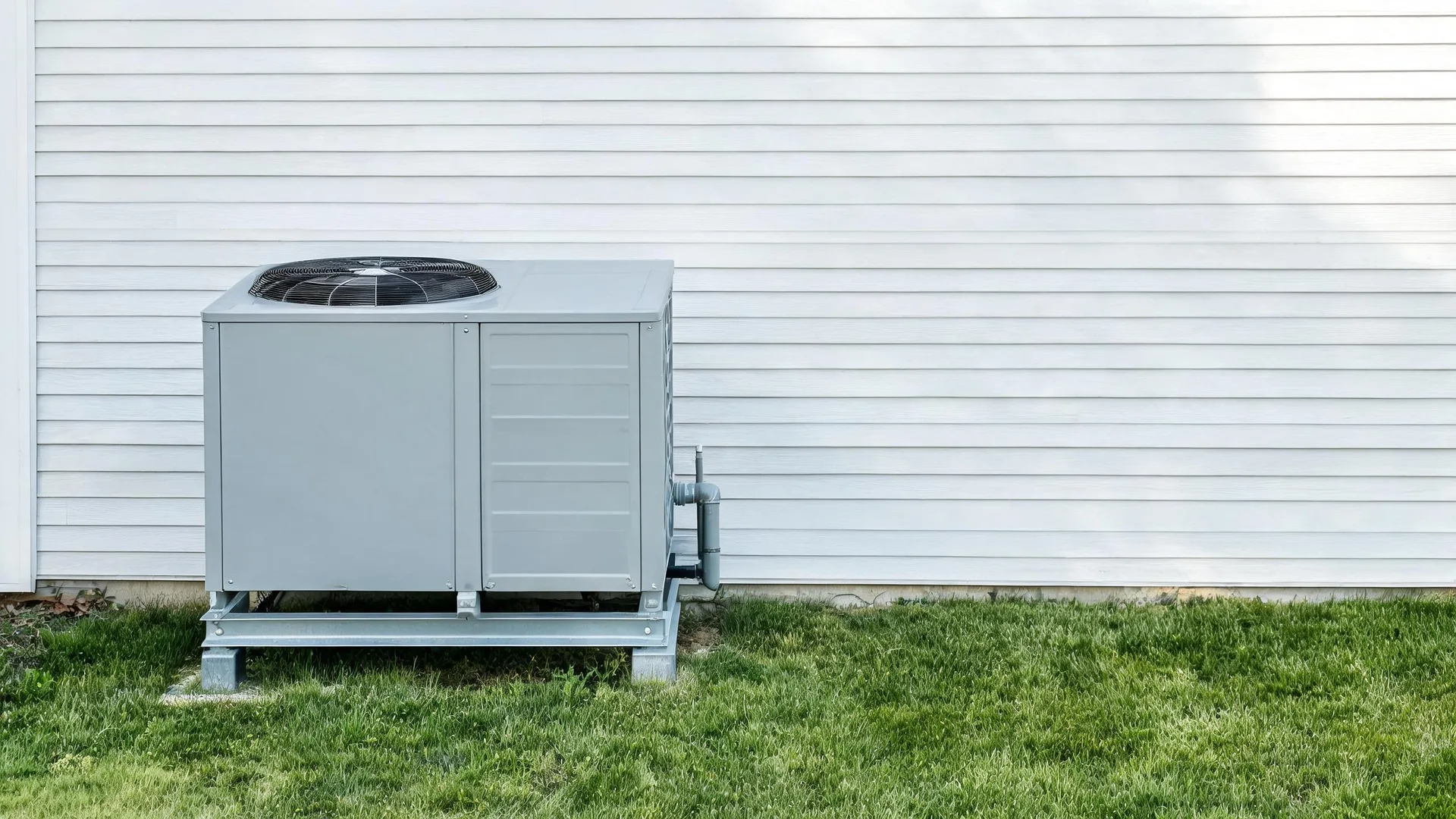
A gray residential air conditioning condenser unit mounted on a concrete pad outdoors, surrounded by green grass under a partly cloudy blue sky.

Two months of work a year

Two months of real work a year, July and August, with afternoon highs averaging around 80. That's a light load next to a system working all summer long. The compressor isn't running hard most of the year, so a standard system has an easy time keeping up and isn't cycling itself into an early repair. What wears a system out around here is more likely a storm than the summer heat. The county sees damaging wind and hail most years, and that's what a new unit needs to be set up to handle.

Ask what happens to the old line set

Reusing the existing refrigerant lines is common, but they have to be checked for the right diameter and cleaned out before the new system runs through them. Ask whether the lines are being reused or replaced, and if reused, what gets done to them first. A new compressor pushing refrigerant through old lines full of the wrong oil residue is a repair waiting to happen.

Ask who signs off on the final charge

A system can be installed correctly and still run poorly if the refrigerant charge is off. Ask whether the contractor checks the charge against the manufacturer's specification using gauges, or just fills it and moves on. The number on the spec sheet is the only one that matters, not a guess at how full the lines feel.

Overhead view of a gray residential air conditioning condenser unit mounted on a concrete pad beside a house with asphalt shingle roofing.

A higher-efficiency unit would save about $40 a year to run in Rockingham County compared with a new unit at the federal minimum.

  • A higher-efficiency unit$240 a year
  • A new unit at the federal minimum, 13.4 SEER2$280 a year

Estimates for a typical Rockingham County home, from EIA household energy data, New Hampshire fuel prices and NOAA climate normals. Your home will differ.

Install day starts with the old equipment coming out, not the new one going in. The old condenser gets disconnected and removed, and if the indoor coil is being swapped too, that comes out next. Once the lines are open, a contractor pulls a vacuum on them to pull out air and moisture before any refrigerant goes in, because either one left in the lines will damage the new compressor. The new condenser gets set on its pad, the coil gets connected on the inside, and the electrical and condensate drain get hooked up. After that the system runs while the contractor checks the refrigerant charge against the spec sheet and checks airflow at the vents. A system that gets switched on without that last check can run for years with a problem nobody caught.