




A tabby cat rests on a made bed in a dark modern bedroom equipped with a wall-mounted split air conditioner.

Mini Split Installation in Concord, NH

Tell us about the job

Takes about a minute. No obligation.

New system or replacementMini-splitMerrimack County, NH
Step 1 of 2

What ZIP code is the job in?

Merrimack County has logged 138 severe weather events in the past decade, from damaging wind to hail to winter storms. That matters for where the outdoor unit goes. It mounts on an exterior wall or a pad, so pick a spot clear of roof runoff and away from where snow or ice will slide off above it. A mini split also gives you a way to hold heat in part of the house if the main furnace goes down, since each indoor head can run on its own off the outdoor unit. That only works while the power is on, and statewide close to a quarter of households lost power for a day or more last year. Worth asking about backup power when you're planning the install.

9 months
September through May, your system heats
2 months
July through August, it cools
14°F
the average winter night it heats against
79°F
the average summer afternoon it cools against
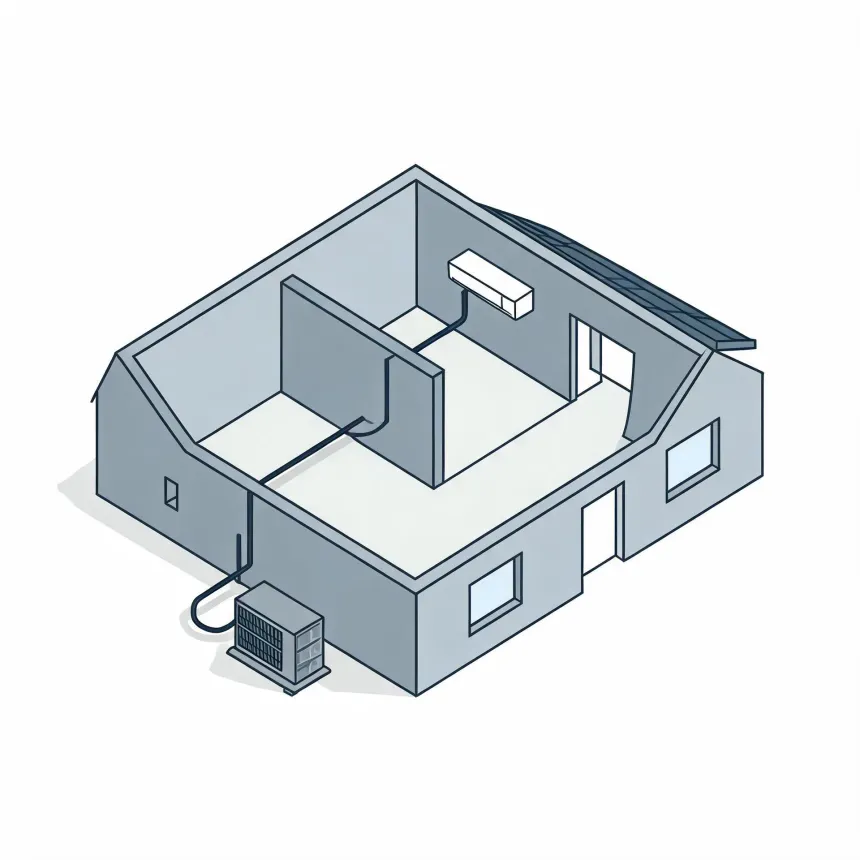
Isometric line illustration of a cutaway house showing an interior wall-mounted air conditioning unit connected by a line to an outdoor condenser beside the exterior wall.
Your system heats September through May and cools July through August.

NOAA nClimDiv, 1991–2020 normals

The old system doesn't have to come out before the new one goes in.

Most mini split jobs run the new line set and mount the indoor heads while whatever heated the place before stays in service, so there's no cold stretch waiting on the swap.

Two months of cooling, so get it mounted before July

Cooling runs July through August
Summer afternoons average 79°F
79 damaging wind events from 2015 to 2024

Fuel oil heats a third of the homes in Merrimack County, more than any other fuel, with LP gas and utility gas behind it. A mini split doesn't replace that system, it works alongside it. The oil furnace keeps running for the whole house, and the mini split handles cooling in summer and takes the load off the furnace in the rooms it serves. That's worth knowing if you're budgeting fuel deliveries, since every degree the mini split covers in spring and fall is oil you're not burning. Ask what size unit fits the rooms you want covered before you commit to a system meant for the whole house.

The efficiency minimum is set. Find out what else is.

Any mini split going in here has to hit 14.3 SEER2 for cooling and 7.5 HSPF2 for heating, the federal minimum for split systems since January 2023. That floor is already built into what's on the market, so it's less a choice you make and more a baseline every unit clears. Check what federal tax credit applies to the system you're considering before you sign anything.

Find a contractor
A man in a cap, dark jacket and tan work pants, seen from behind, carries a canvas tool bag up porch steps toward a green front door beside a potted shrub.
A beige split-system air conditioner outdoor condenser unit mounted on metal wall brackets atop a stucco wall.

Light duty in summer, so pick for reliability, not the top SEER2 number

Two months of cooling a year, with afternoon highs averaging 79. That's a mild run compared to most of the country, and it's not asking much of the outdoor unit. The bigger job is heating, since this is a cold climate where furnaces and mini splits alike spend most of their hours keeping rooms warm, not cool. A system that isn't strained by summer here is one more thing that can last, so the repair calls you get later are more likely to be about age or upkeep than about a unit run into the ground.

Ask for the room by room load calculation

A mini split should be sized off a load calculation for each room it serves, not a flat number pulled from square footage. Too big and the indoor head short cycles, cooling or heating the room fast then shutting off before it pulls moisture out of the air or settles the temperature evenly. Too small and it runs flat out without keeping up on the coldest or hottest days. Ask to see the numbers, not just the final unit size.
Ask what happens at the lowest heating setting

Not every outdoor unit keeps producing heat once the temperature really drops. Some are rated to hold output down to a low outdoor temperature, others fall off well before that and lean harder on backup heat. If the mini split is meant to carry real heating load and not just take the edge off, ask for the manufacturer's capacity rating at the coldest temperatures this area sees, not just the rating at mild conditions.

What drives the price on a mini split job is mostly the line set, not the equipment. Running refrigerant line from outdoor unit to indoor head means opening a wall and routing through framing or along an exterior face. That's labor hours more than parts cost. A single zone with a short, simple run costs less than a multi zone setup feeding several heads through different rooms, since each indoor head needs its own line run back to the outdoor unit. Where the outdoor unit lands matters too. A pad on open ground is simple. A wall mount bracket, or a spot that needs a crane or extra structural work to hold the weight, adds to the job. Electrical is its own piece. If the panel has room for a new circuit, that's straightforward. A panel near capacity may need upgrading before the mini split can even be connected. Ask the contractor to walk the actual path the line set and wiring will take before they quote the job, not just count the heads.

Installation starts outside, with the outdoor unit set on its pad or bracket and the line set run to each room getting an indoor head. The wall gets a small hole drilled through for the refrigerant line, drain line and electrical, usually no bigger around than a fist. Once the indoor head is mounted and connected, the line set gets pressure tested to check for leaks before any refrigerant goes in. After that it's pulled into a vacuum to clear out moisture and air, since either one left in the line will hurt how the system runs and can damage the compressor over time. Only after it holds that vacuum does the refrigerant get released from the outdoor unit into the lines. The last step is powering it on and checking that each head is heating and cooling to the thermostat setting, and that the drain line is clearing condensate the way it should.